

 Brett Gavin
For many Australians, super stays put until retirement. But did you know there are a few exceptions that let you access super early? Most of these exist to cover sudden unexpected costs. For example, a medical bill or a funeral. This is called compassionate release of super. It runs through the ATO under a set of tightly defined compassionate grounds.
If you’re considering compassionate release of super as a lifeline, read on. This guide explains what those compassionate grounds cover, what they don’t, how to apply, and what it can cost your retirement balance. Note that this is general information only, not financial advice, and it reflects the rules as of October 2026.
What Are the Compassionate Grounds for Releasing Super Early?
The ATO lets you apply to access super early on compassionate grounds, usually to pay for specific costs for you or your dependant. These are the six main reasons:
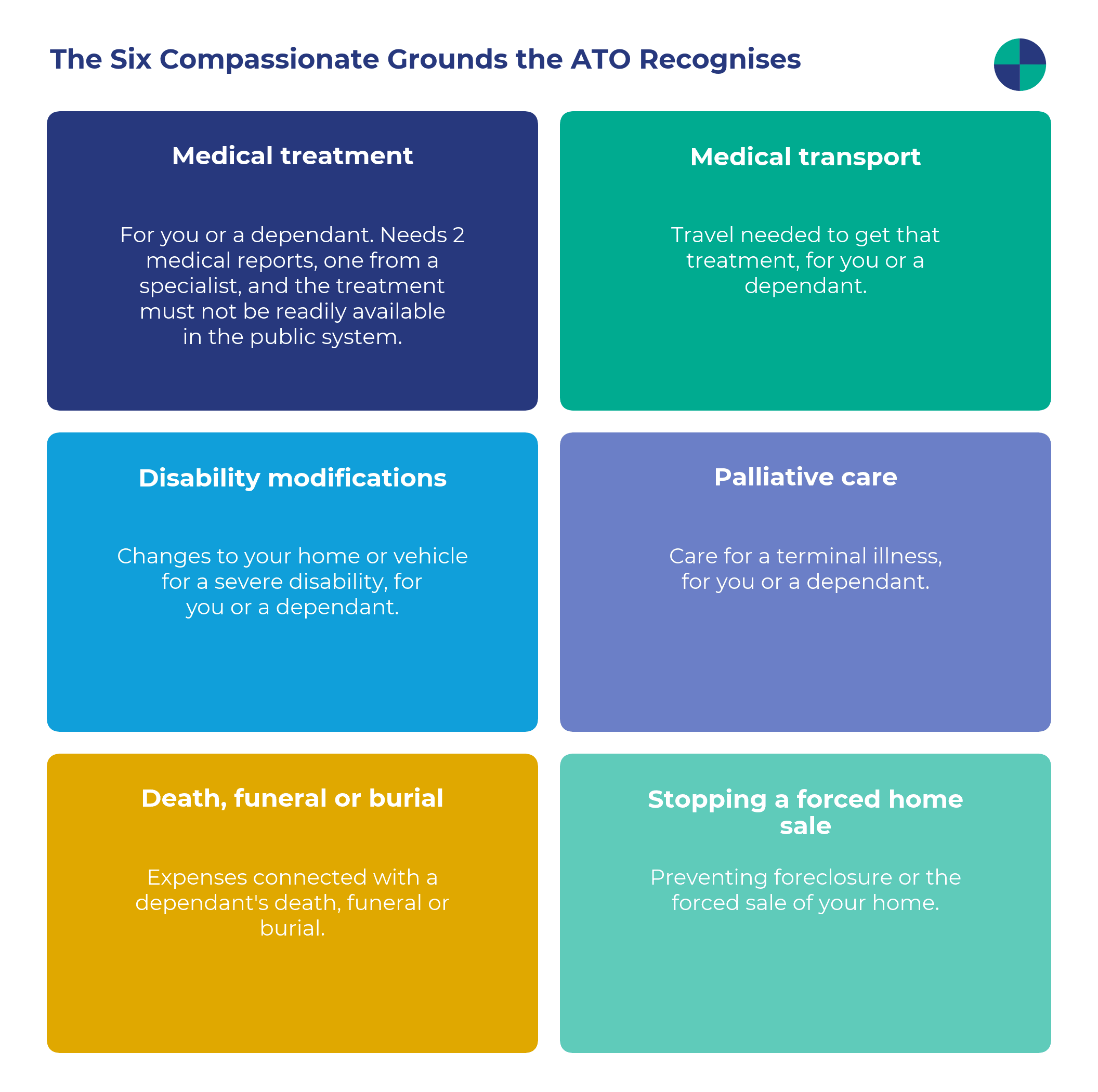
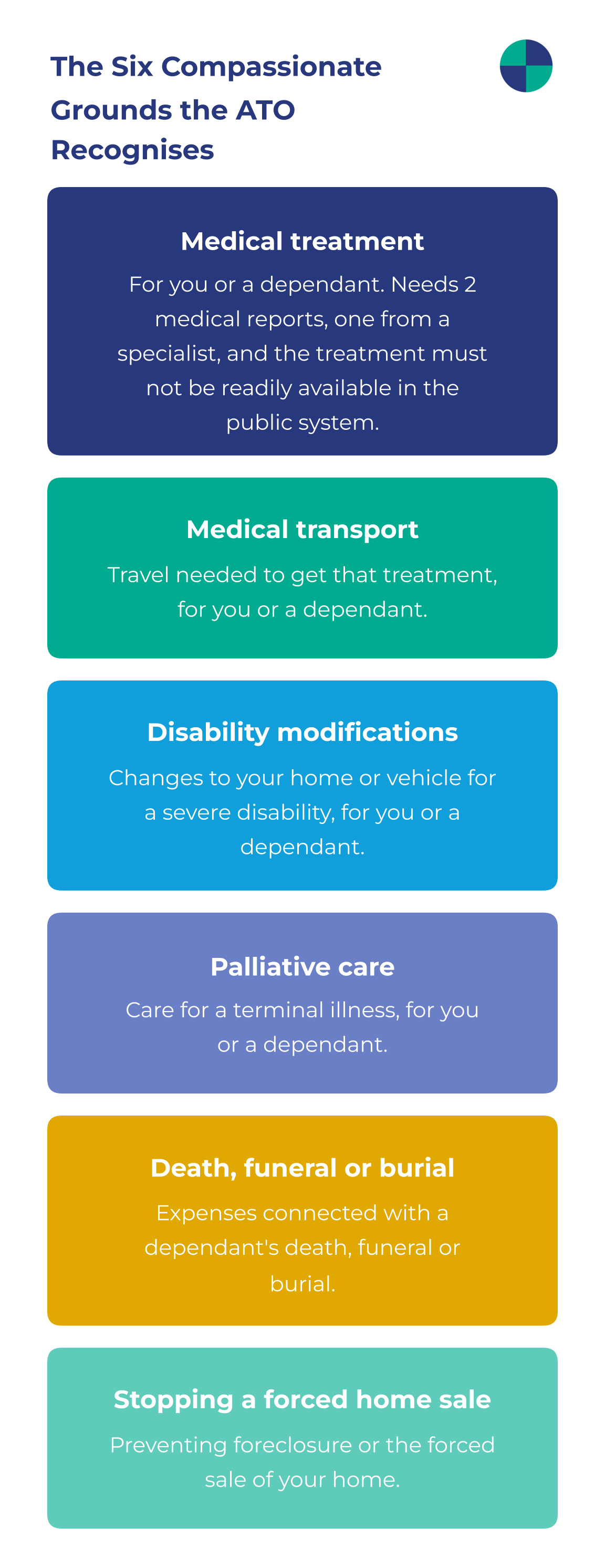
Figure 1. The six compassionate grounds recognised by the ATO. Source: ATO, accessed October 2026.
Each ground has its own evidence rules, and the ATO won’t approve a claim without them.
Medical treatment and transport
To release super funds for medical treatment, the law says the treatment must be necessary to either:
- Treat a life-threatening illness or injury
- Ease acute or chronic pain or mental illness
You need two separate medical reports, and at least one must come from a specialist treating the condition. The reports must also explain that the treatment isn’t readily available in the public health system. Treatments such as psychiatric and dental care can qualify where the evidence supports it.
Compassionate release of super can also pay for medical transport related to this essential treatment. For example, flights to attend treatment.
Palliative care and funeral costs
For palliative care, things are a little different. To start with, you’ll need a medical report. However, you’ll also need an itemised quote or invoice listing each palliative care expense.
Not every expense related to palliative care counts here. Rent, mortgage payments, and utilities aren’t eligible palliative care expenses. Neither is prepaying funeral costs. Death and funeral expenses are a separate ground, and they apply to a dependant.
Stopping a forced home sale
This ground is for preventing foreclosure or the forced sale of your home.
However, it’s important to read the ATO’s own rules on which costs it may cover and how much before you apply, as it can be complicated.
What Do Compassionate Grounds Not Cover?
This is where many Aussies get caught out. The ATO is clear that compassionate grounds don’t include certain expenses (even in genuine hardship) listed below:
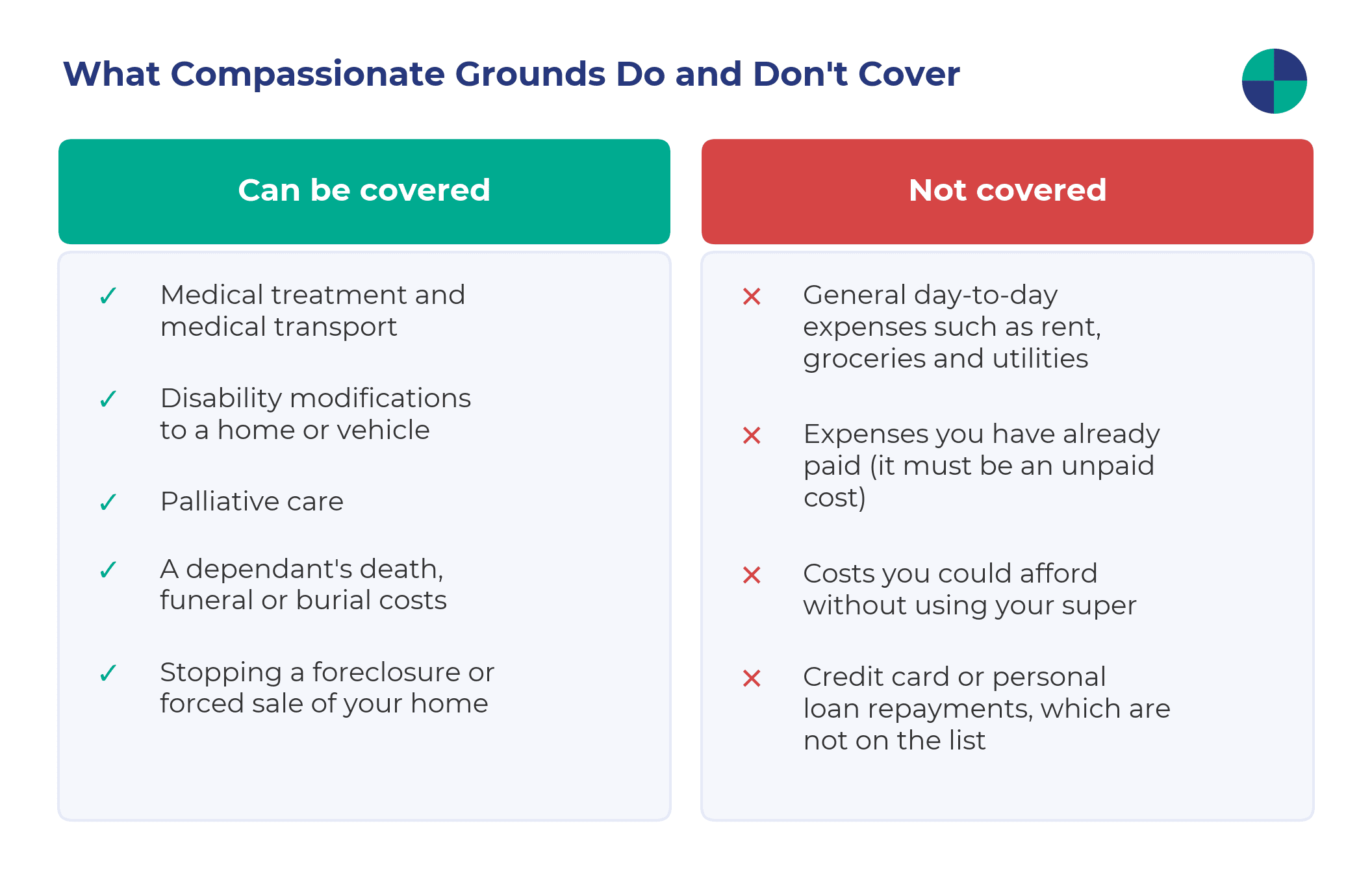
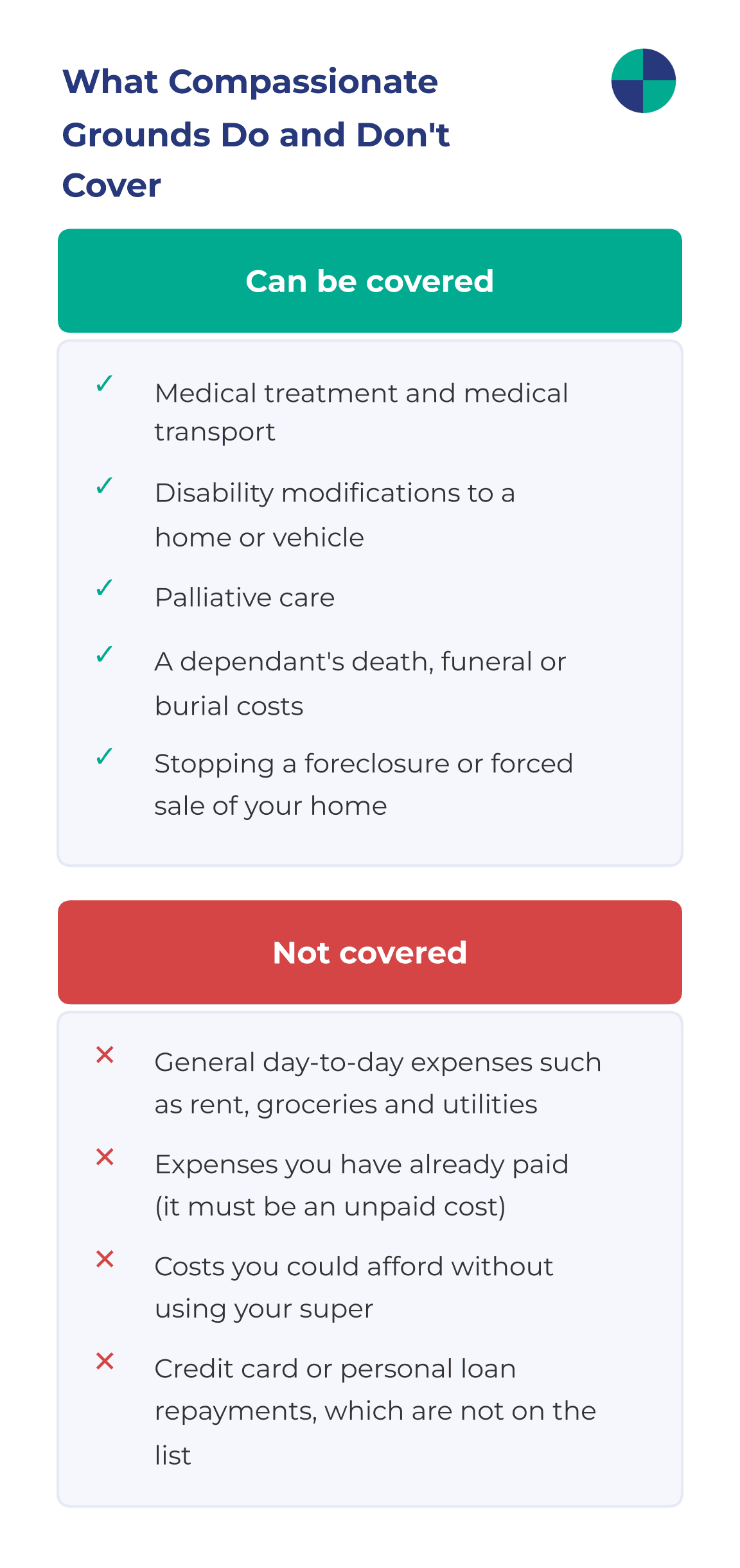
Figure 2. What compassionate grounds can and can’t cover. Source: ATO, accessed October 2026.
A couple of rules to bear in mind:
- The cost must be unpaid when you apply
- You must be unable to afford it without using your super
If your problem is rent, groceries, or utilities, a different route may fit. We’ll go over your options next.
How Is Compassionate Release of Super Different From a Financial Hardship Super Withdrawal?
People often mix the two up. In general:
- They sit under different rules
- They’re decided by different bodies
- They cover different costs
Here’s a handy breakdown:
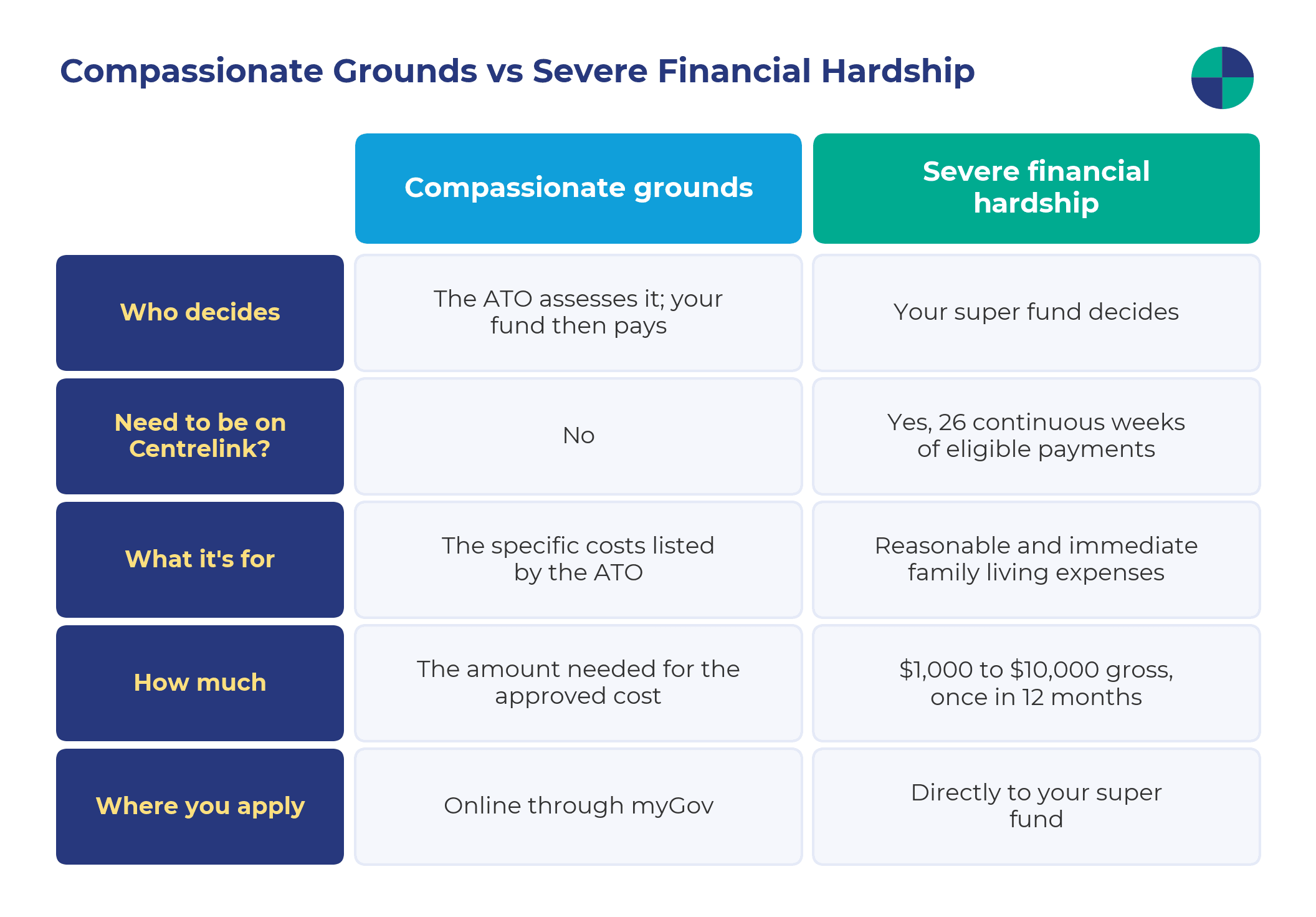
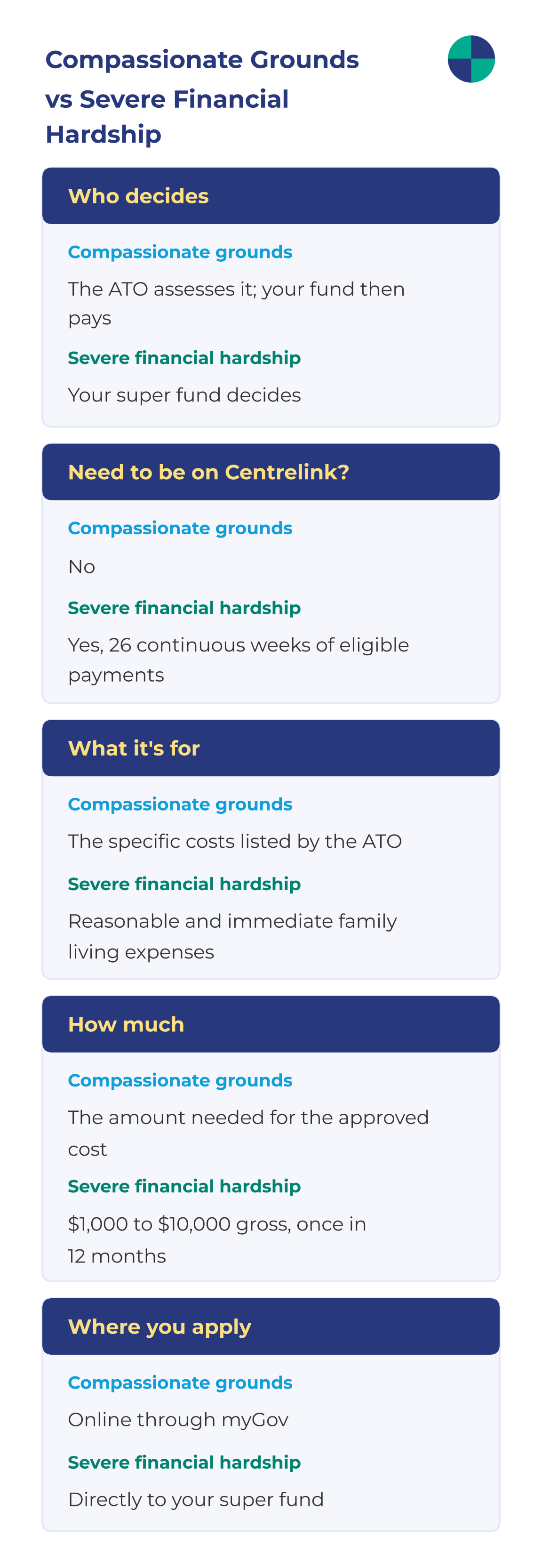
Figure 3. The two main routes to early release of super. Sources: ATO, Services Australia, National Debt Helpline, accessed October 2026.
A financial hardship super withdrawal is decided by your super fund. You must have received an eligible Centrelink or Department of Veterans’ Affairs payment for 26 continuous weeks. It covers reasonable and immediate family living expenses.
Compassionate grounds don’t require you to be on Centrelink, but they only cover the listed costs. Our guide to the severe financial hardship super release walks through that route in detail.
How Do You Apply for Compassionate Release of Super?
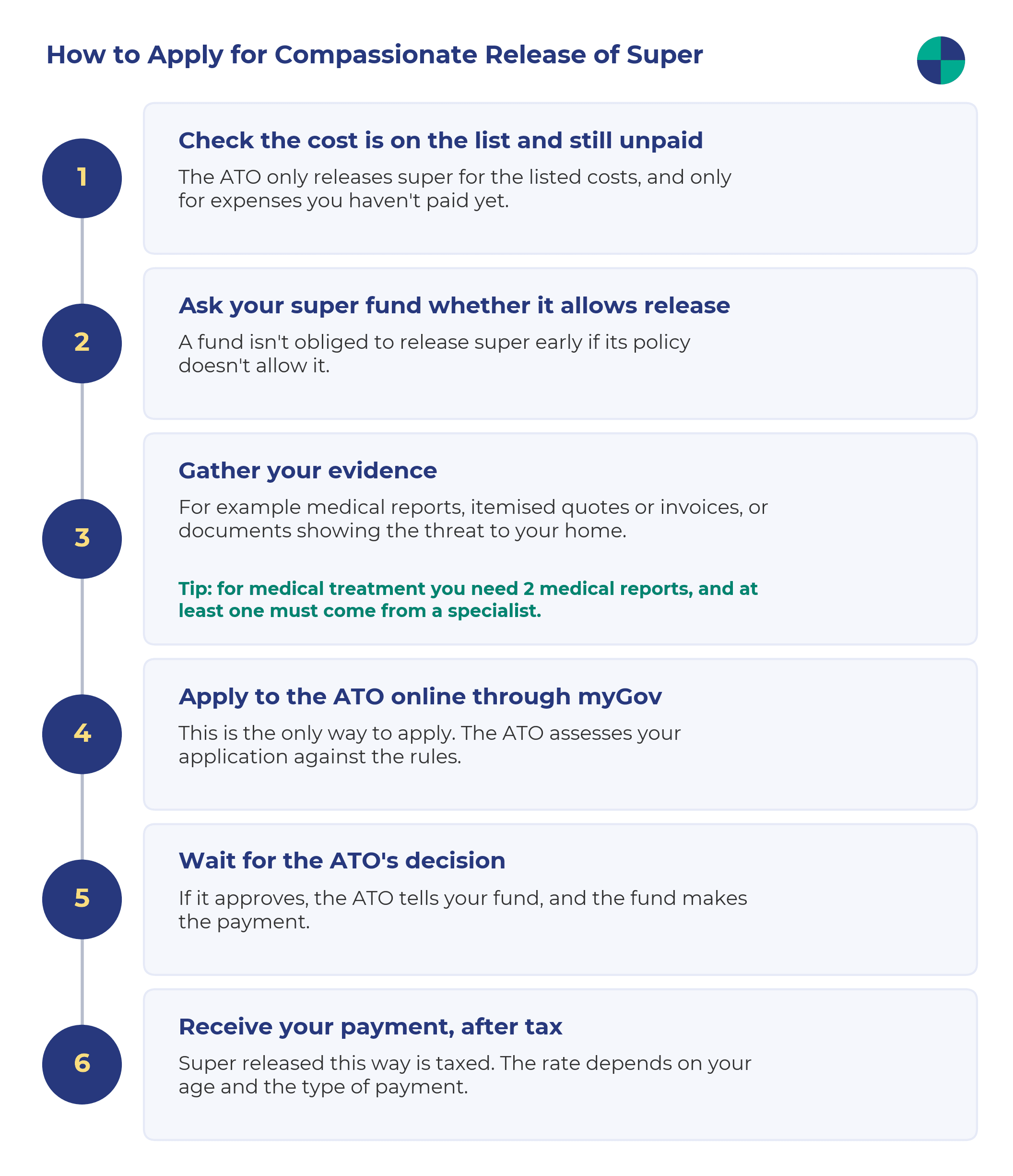
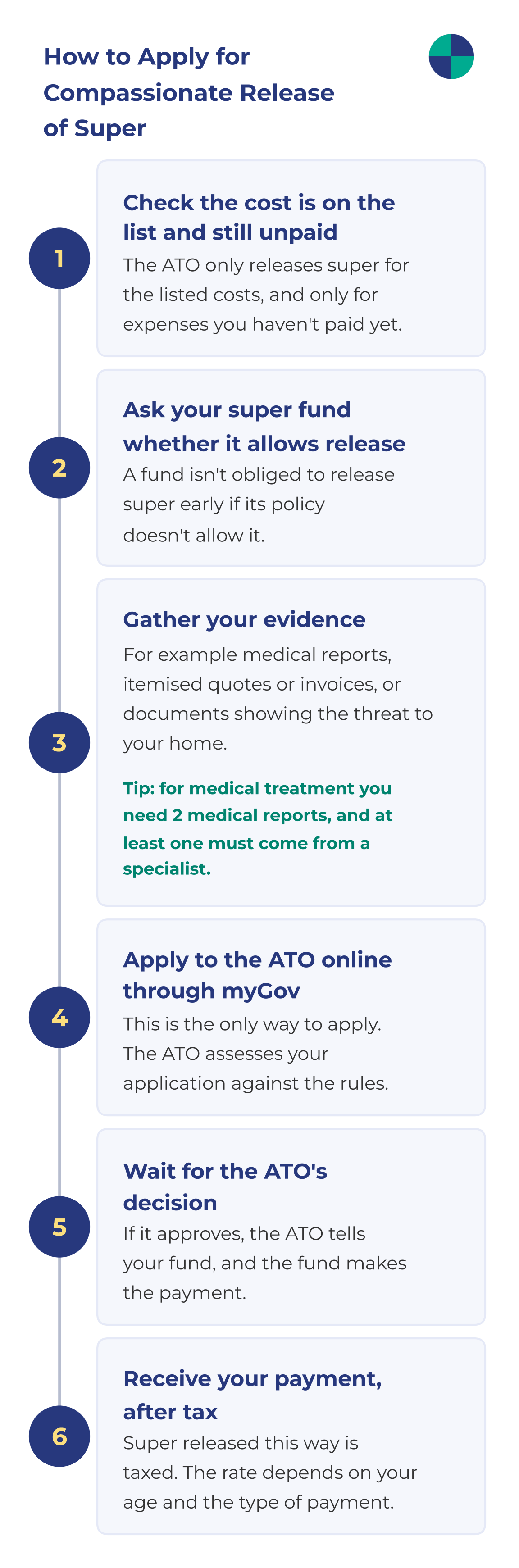
Figure 4. The application process for compassionate release of super. Sources: ATO and National Debt Helpline, accessed October 2026.
You can only apply to the ATO online through myGov. Check with your fund first, because it isn’t obliged to release your super early if its policy doesn’t allow it.
If you’re terminally ill, you can apply directly to your fund once two registered medical practitioners certify that your illness is likely to result in death within 24 months.
Can You Access Super Early Without Compassionate Grounds?
In some situations, yes, but the list is very limited. Services Australia lists:
- Severe financial hardship
- A terminal medical condition
- Being a temporary resident
- Having less than $200 in a super fund
Outside those, super is generally preserved until you reach preservation age, which is currently 60 for everyone. In our professional opinion, super is worth preserving until retirement. We don’t recommend withdrawing money from super early without speaking to a debt management company and assessing all your options first.
For many of our customers who either don’t qualify for compassionate grounds or want to preserve their super fund, that leaves severe financial hardship as the simplest and most popular alternative. However, your fund, not the ATO, decides on your financial hardship super withdrawal application.
Be wary of anyone who offers to help you access super early outside these rules. The ATO warns Australians about people promoting illegal early release. Taking part can carry serious consequences.
How Often Do These Situations Show Up in Revive Client Records?
Our client records clearly show who seeks compassionate grounds and why. Bear in mind, however, that these describe Revive’s clients only, not all Australians. People who contact us tend to have some capacity to repay, so people on very low or no income may be under-represented.
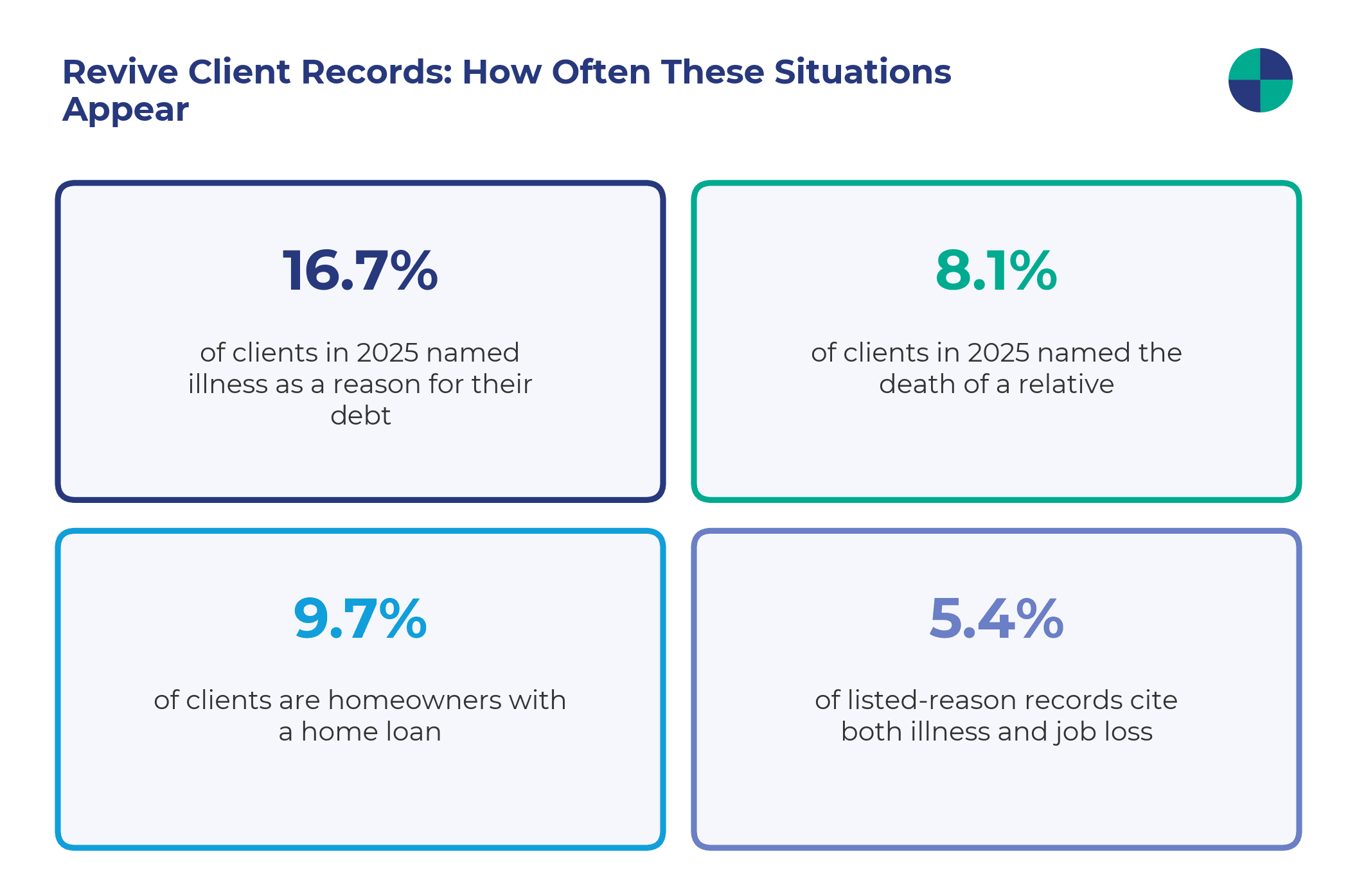
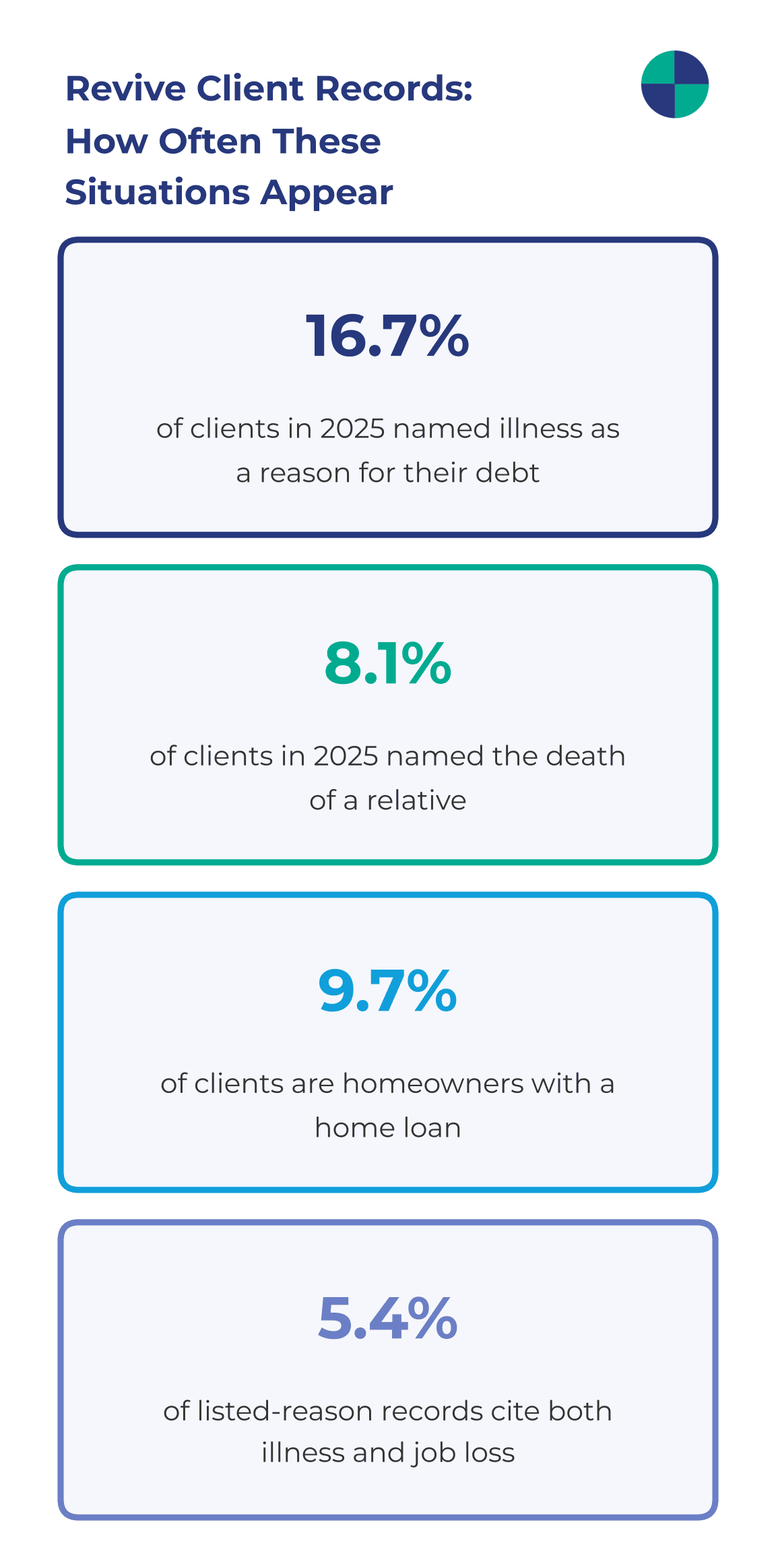
Figure 5. Revive Financial client records. Illness and death of a relative: 2025 records with a circumstance recorded. Homeowners: all years. Both-reasons figure: 2019 to 2025 records with a listed reason.
In 2025, 16.7% of Revive clients named illness as a reason for their debt and 8.1% named the death of a relative. About 1 in 10 clients (9.7%) are homeowners with a home loan. Illness and job loss are often connected. In records with at least one listed reason, 5.4% named both.
These are the situations compassionate grounds are built around. However, it’s important to note that these statistics don’t tell us how many people applied or were approved. Most clients find alternative routes with Revive Financial, so they never touch their super.
What Does Compassionate Release of Super Cost You?
Super released on compassionate grounds is paid and taxed, which is the main cost. The exact rate depends on your age and other factors.
However, the biggest cost is often the growth you give up. Here’s an example (illustration only):
$10,000 left invested at 5% a year after fees and tax would grow to about $26,500 over 20 years, assuming no further contributions. Real returns can be higher, lower, or negative.
That’s why the ATO says you should only consider compassionate grounds once you’ve exhausted all other ways of paying your costs.
What Does This Look Like in Practice?
Danielle’s Story (Illustrative)
Danielle, a hypothetical 47-year-old, was told by her specialist that she needs treatment that isn’t readily available in the public system. She asked her fund whether it releases super on compassionate grounds, then collected 2 medical reports (one from her specialist) and an itemised quote.
She applied through myGov. The ATO assessed her application against the rules, and after approval her fund paid the amount less tax. Her retirement balance was lower afterwards, which she factored into her plans.
Raj’s Story (Illustrative)
Raj, a hypothetical 39-year-old, fell behind on his home loan after his hours were cut, and his lender began steps that could lead to a forced sale. Before applying, he rang the lender’s hardship team and the National Debt Helpline.
Because compassionate grounds can apply to preventing a forced sale of your home, he also explored an application, gathering letters from the lender as evidence. He understood that approval isn’t guaranteed and that it would reduce his super.
Both examples are illustrative and don’t describe specific individuals. Outcomes vary and depend on individual circumstances and the ATO’s assessment.
What Are Your Other Options?
Here are some avenues you should explore if you’re in financial hardship:
- Your provider or lender: Ask for a payment plan or hardship arrangement before using super.
- National Debt Helpline (1800 007 007, ndh.org.au): Free financial counselling.
- Moneysmart (moneysmart.gov.au): Free government money guidance.
- A financial hardship super withdrawal: If you’ve been on an eligible Centrelink payment for 26 continuous weeks, your fund may allow a smaller release for living expenses.
If unsecured debt like credit cards or personal loans is part of the pressure, Revive Financial offers a free, no-obligation assessment. We can’t advise on your super, and our options don’t cover secured debts such as a home loan, but our Success Specialists will be more than happy to talk through a Temporary Hardship Plan, an Informal Agreement, or a Part 9 Debt Agreement. Each depends on your circumstances and on creditors agreeing.
A Part 9 Debt Agreement is listed on the public National Personal Insolvency Index and on your credit report, may not release every debt, and can end if repayments aren’t met. Debt Agreements also carry fees, which our Success Specialists explain in writing before you decide.
Before You Apply
Compassionate grounds are narrow by design. They exist for six specific costs, they require evidence, and they permanently reduce your super. If your cost fits, they can be a lifeline. But there are usually other routes to try first, starting with a conversation with your provider and a free call to the National Debt Helpline. If you’re weighing up whether you can access super early for living costs rather than a listed expense, ask your fund about a financial hardship super withdrawal first.
General information only. This article isn’t financial, legal or tax advice, and Revive Financial can’t advise on your superannuation or Centrelink entitlements. Rules, rates and figures are as at October 2026 and can change, so check the sources named and your own provider. Outcomes vary and depend on your circumstances and, for debt options, on creditor agreement. Revive Financial: RDAA 1337 (Debt Agreement content) and ACL 503321 (credit content). Last updated: 8 October 2026.