
 Brett Gavin
Are you a renter who receives a Centrelink payment? If so, there may be an extra payment waiting for you, and you don’t even have to apply for it. This is called Rent Assistance, Centrelink rent assistance, or sometimes Commonwealth Rent Assistance. Whatever you call it, it works the same way for everyone, and it’s very simple: you meet certain criteria, it’s added automatically.
But what are those criteria? This guide covers everything you need to know. We’ll go over how much Rent Assistance you could get from 20 September 2026, who qualifies, how it ends up on your payment, and what rent pressure looks like for Revive’s clients. What follows is general information only and doesn’t replace advice from Services Australia.
What Is Rent Assistance and Who Can Get It?
Commonwealth Rent Assistance is a regular extra payment from Services Australia for people who pay eligible rent or accommodation costs and receive an eligible payment. It’s paid on top of your main payment, not instead of it.
Here’s how it works, in short:
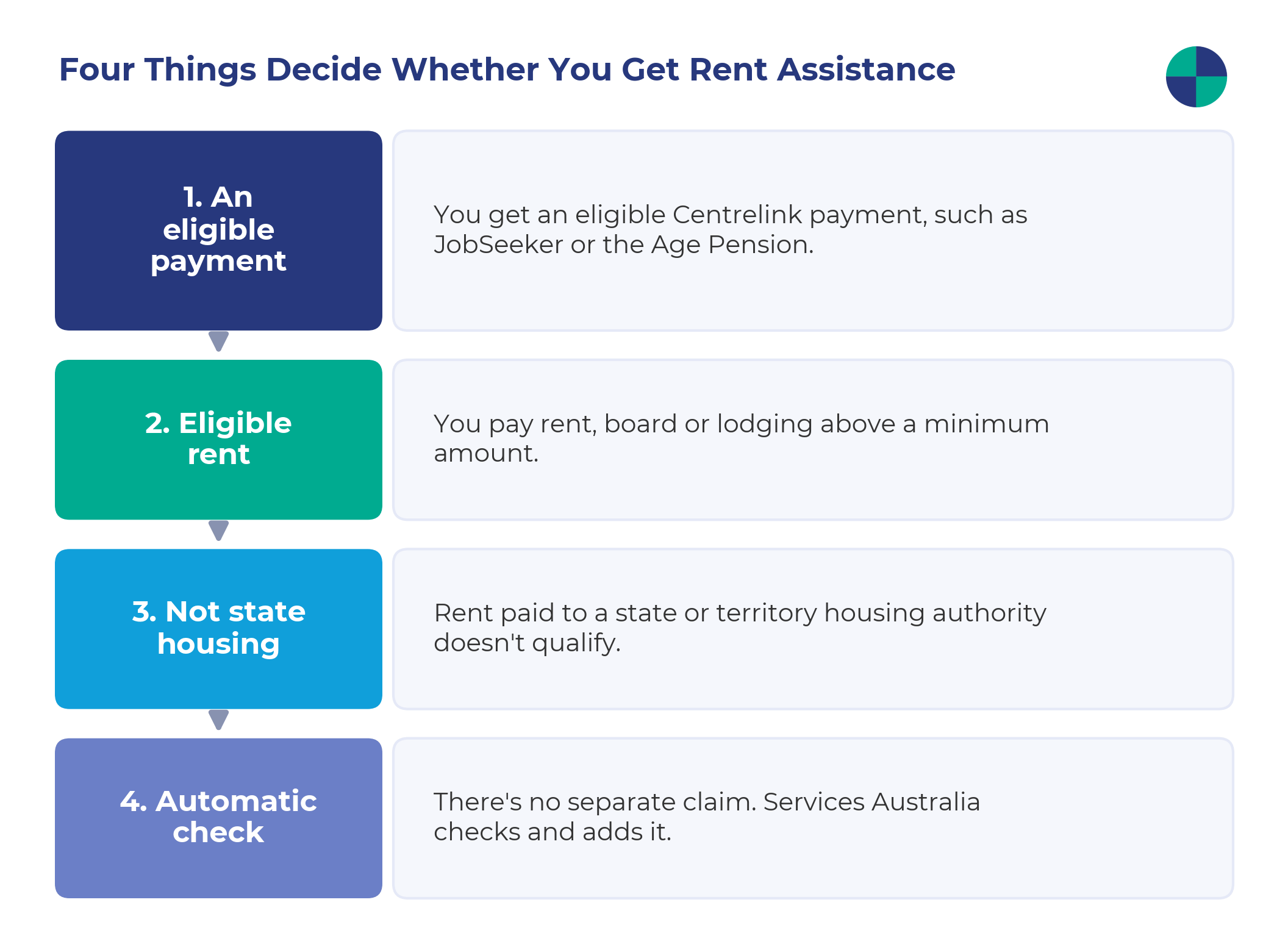
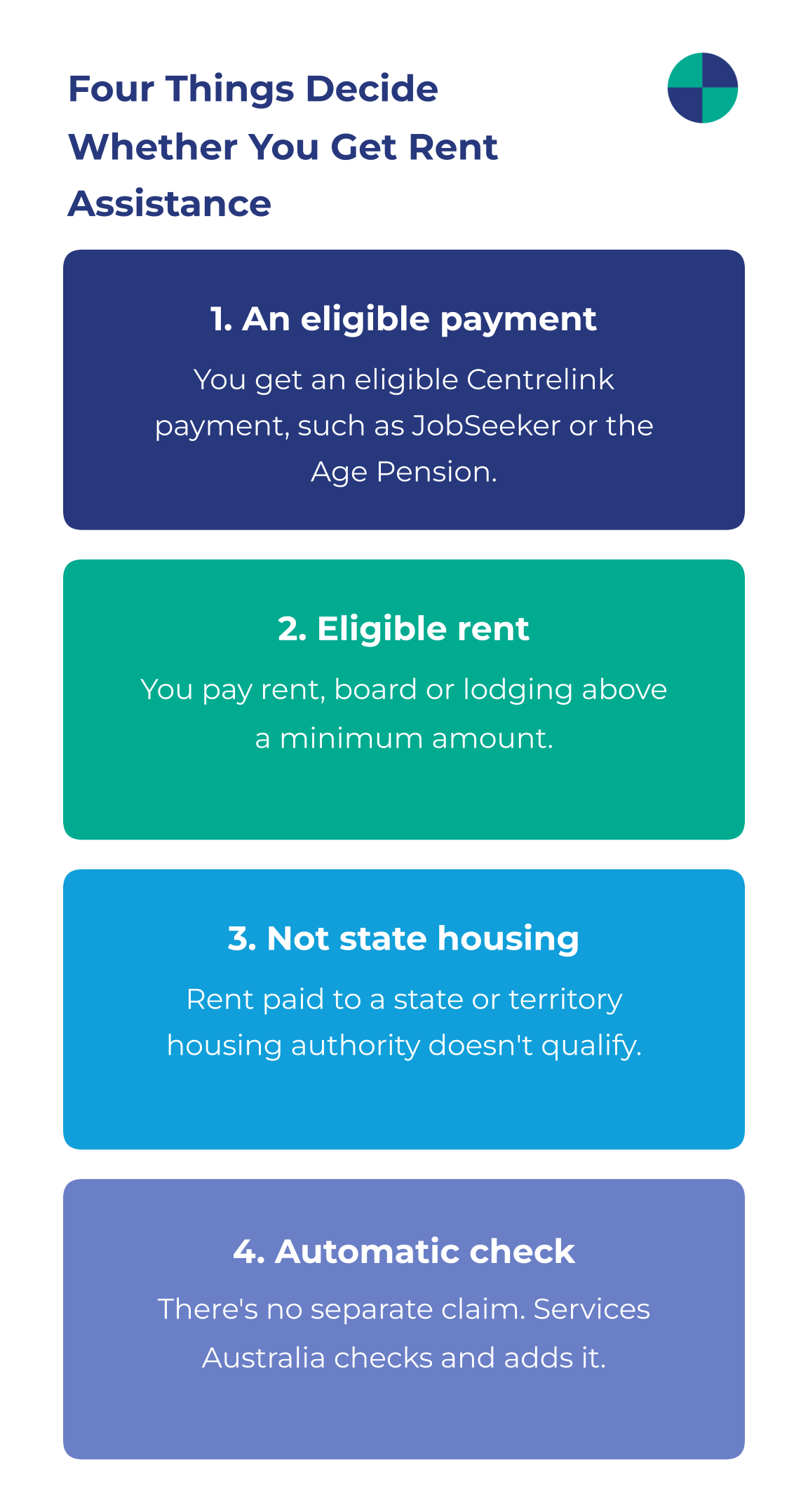
Figure 1. The four things that decide whether you get Rent Assistance. Source: Services Australia, accessed October 2026.
Eligible payments typically include income support, such as:
- JobSeeker Payment
- Youth Allowance
- The Age Pension
- Disability Support Pension
- Carer Payment and Parenting Payment
- Family Tax Benefit above the base rate
The list changes sometimes, so it’s a good idea to check Services Australia for details on your payment.
Not everyone who pays rent qualifies. If you pay rent to a state or territory government housing authority, you aren’t eligible. The same generally applies if you sub-let from a tenant who pays government rent, unless you’re paying only part of the rent.
How Much Rent Assistance Could You Get?
The first thing to understand is that there’s a minimum rent threshold you have to meet before qualifying. Then, the amount you get depends on your rent. You generally get 75 cents for every $1 of rent above the threshold (up to a maximum).
Here’s a breakdown:
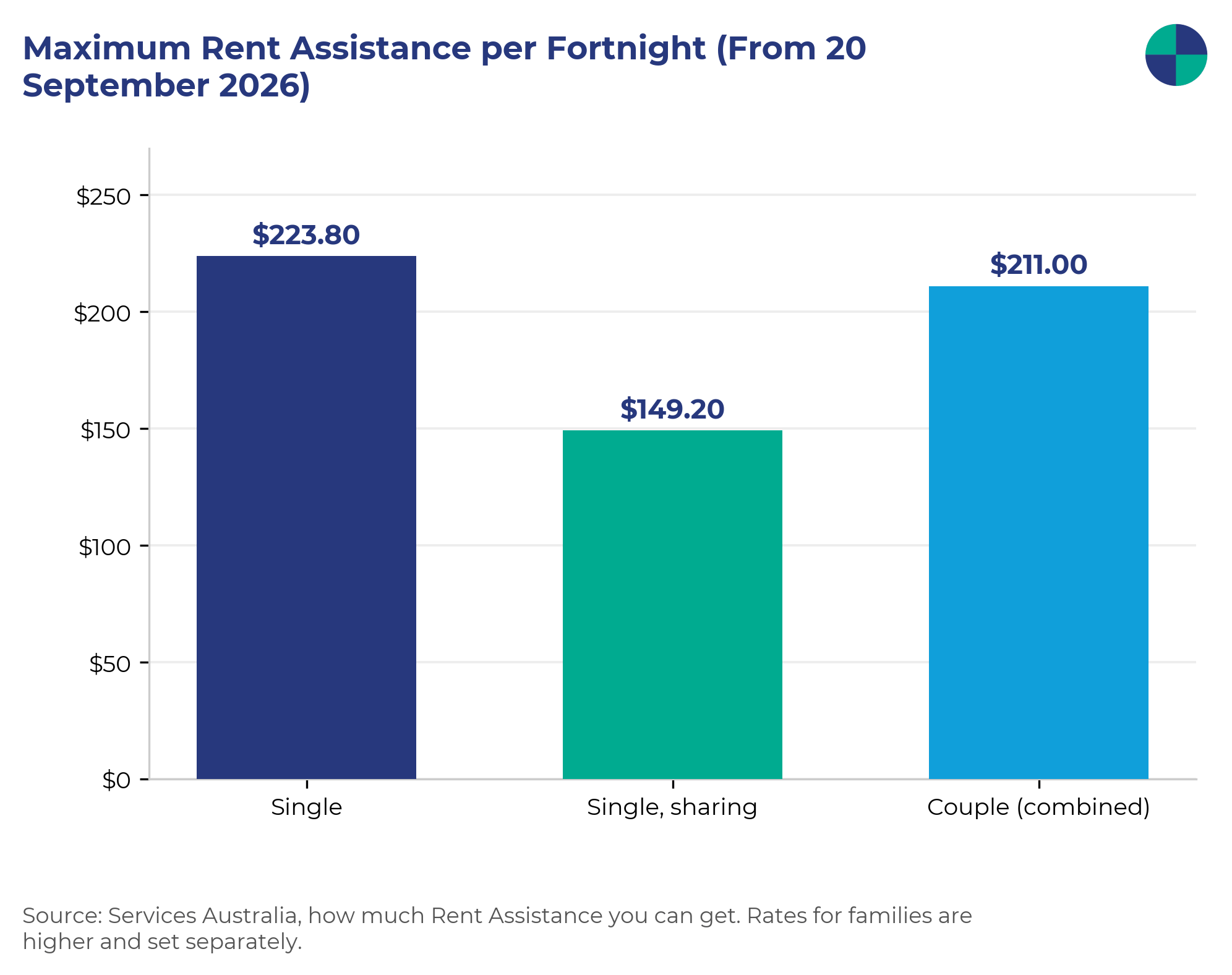
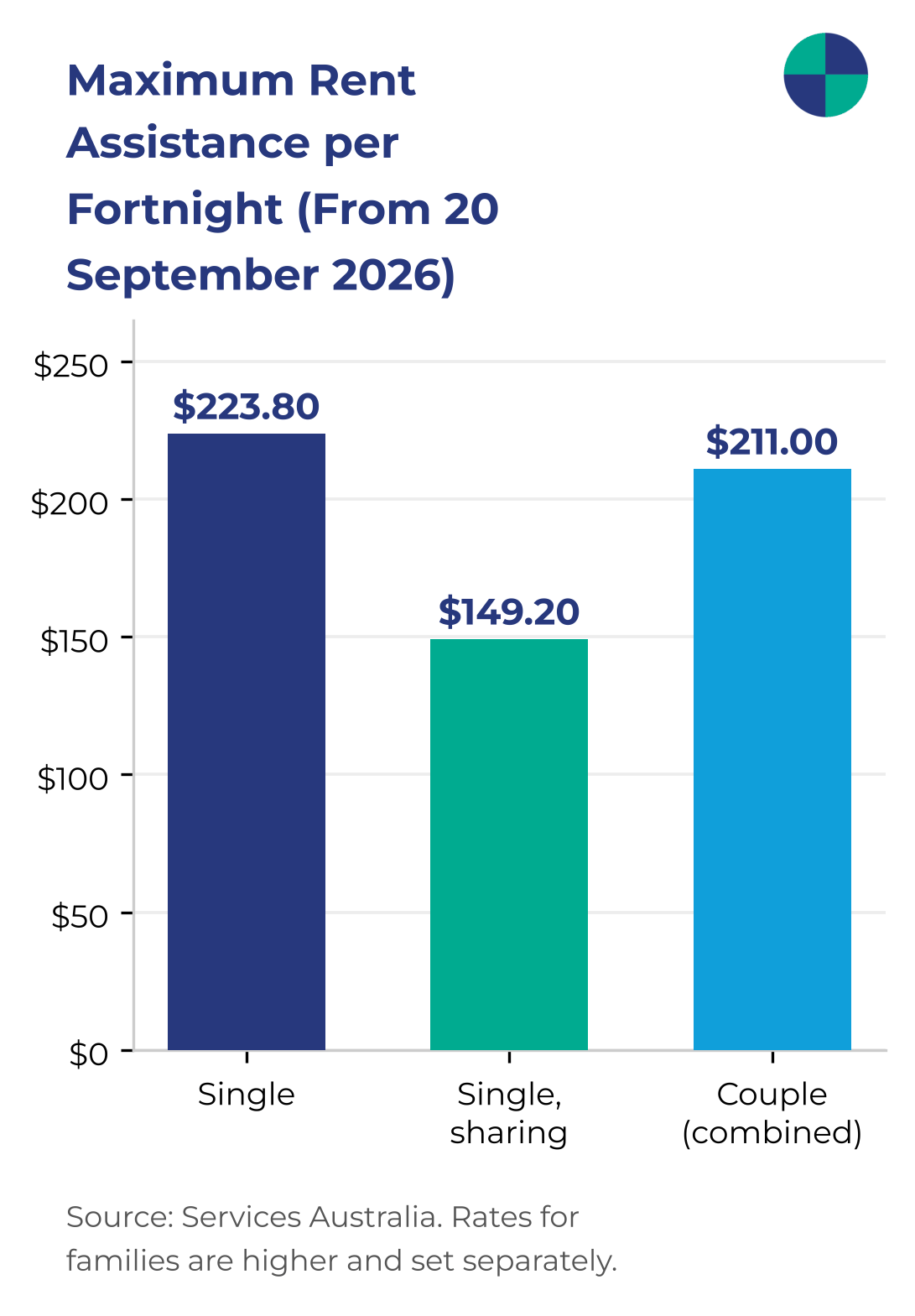
Figure 2. Maximum Rent Assistance per fortnight from 20 September 2026. Source: Services Australia.
- Single: paid on rent above $157.80 a fortnight, up to a maximum of $223.80 a fortnight (reached when rent is $456.20 or more)
- Single, sharing: paid on rent above $157.80 a fortnight, up to a maximum of $149.20 a fortnight (reached when rent is $356.74 or more)
- Couple (combined): paid on rent above $255.80 a fortnight, up to a maximum of $211.00 a fortnight (reached when rent is $537.14 or more)
Source: Services Australia, ’How much Rent Assistance you can get’, printed 7 October 2026. Rates apply when paid with income support payments and ABSTUDY.
Families receiving Family Tax Benefit have separate rates, outlined below:
- Single, 1-2 children: paid on rent above $207.34 a fortnight, up to a maximum of $263.06 a fortnight (reached when rent is $558.09 or more)
- Single, 3+ children: paid on rent above $207.34 a fortnight, up to a maximum of $297.36 a fortnight (reached when rent is $603.82 or more)
- Couple, 1-2 children: paid on rent above $306.60 a fortnight, up to a maximum of $263.06 a fortnight (reached when rent is $657.35 or more)
- Couple, 3+ children: paid on rent above $306.60 a fortnight, up to a maximum of $297.36 a fortnight (reached when rent is $703.08 or more)
- Couple temporarily separated, or separated due to illness, respite care, or prison, 1-2 children: paid on rent above $207.34 a fortnight, up to a maximum of $263.06 a fortnight (reached when rent is $558.09 or more)
- Couple temporarily separated, or separated due to illness, respite care, or prison, 3+ children: paid on rent above $207.34 a fortnight, up to a maximum of $297.36 a fortnight (reached when rent is $603.82 or more)
How Is Rent Assistance Calculated?
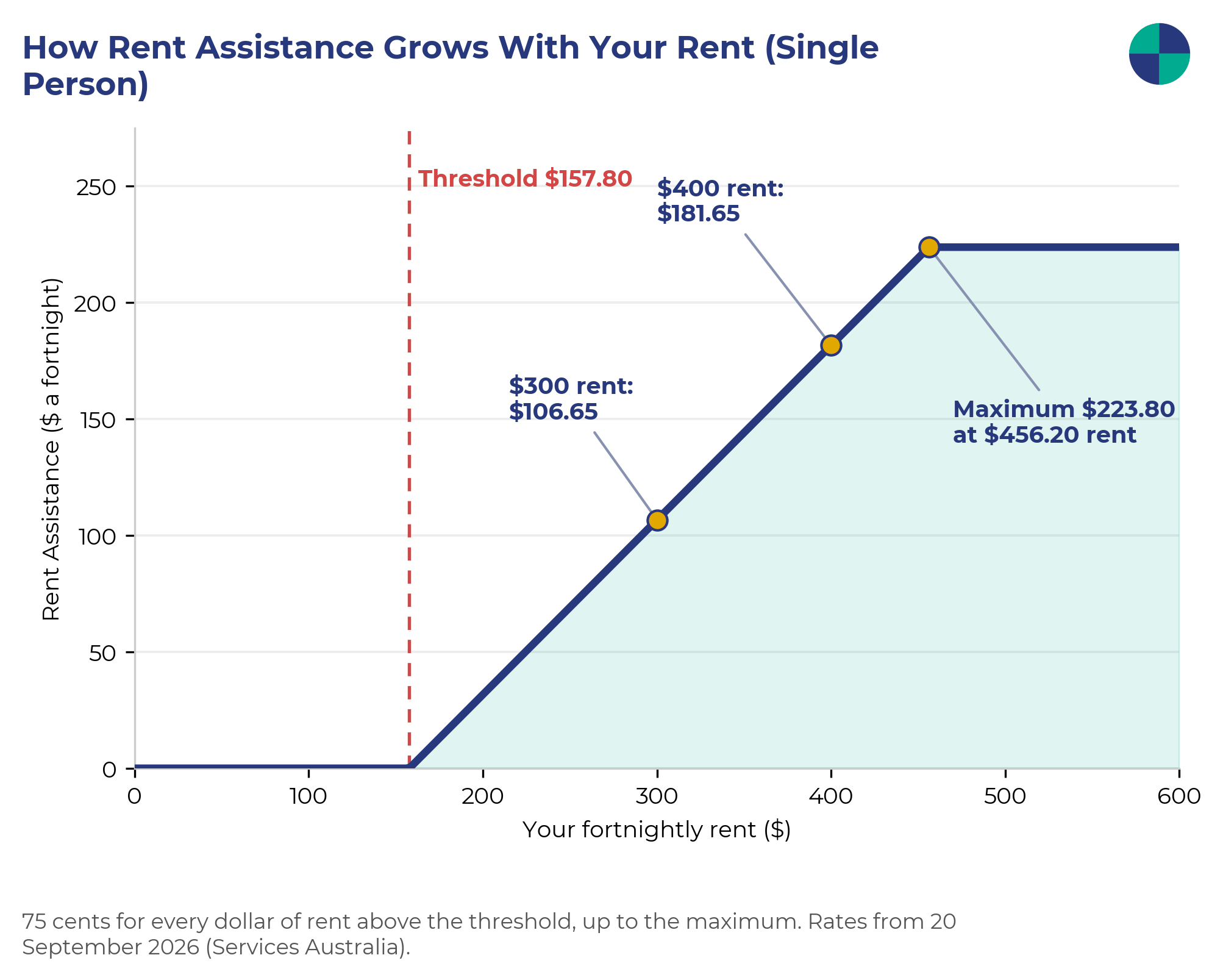
Figure 3. Rent Assistance for a single person at different rents. Source: Services Australia rates from 20 September 2026.
Here’s an example of the calculation in action:
A single person pays $400 a fortnight in rent. That’s $242.20 above the $157.80 threshold, and 75% of it is $181.65 a fortnight. At $300 a fortnight the payment is $106.65. Once rent reaches $456.20 a fortnight, they hit the $223.80 maximum, and paying more rent won’t increase it.
Rates are indexed every 20 March and 20 September, so your amount can change twice a year. Check Services Australia for the figures that apply on the day you read this.
How Do You Apply for Rent Assistance?
You don’t submit a separate claim for Centrelink rent assistance. Services Australia checks whether you can get Rent Assistance when you claim an eligible payment, or when you change your address, accommodation, or rent details.
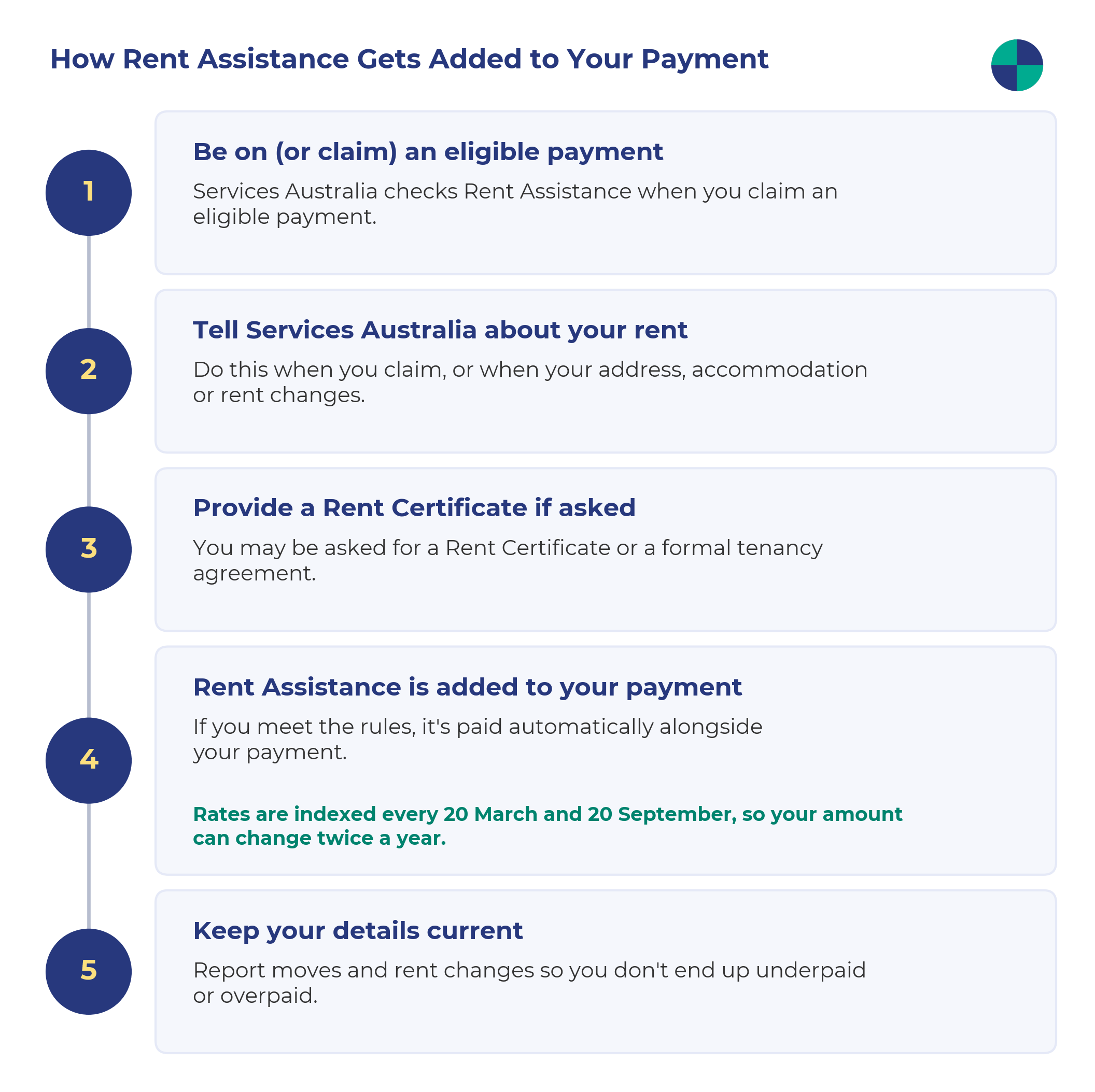
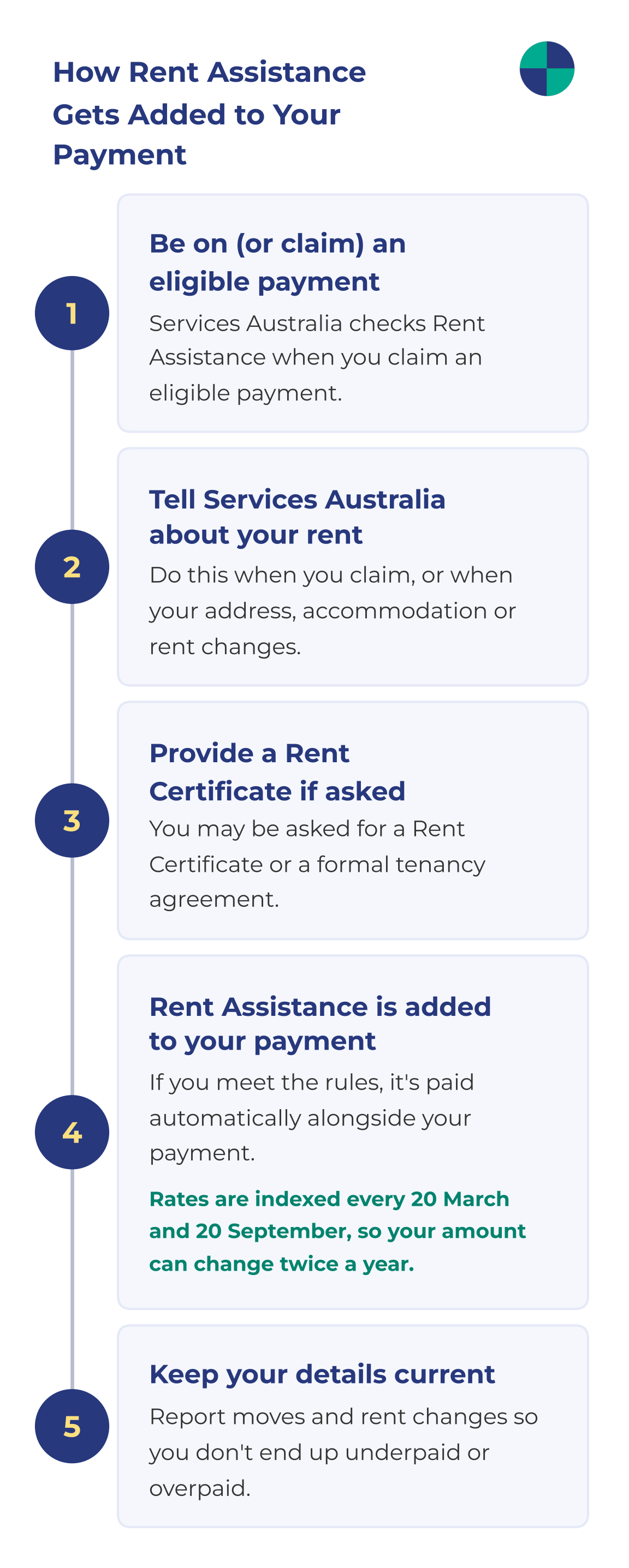
Figure 4. How Rent Assistance gets added to your payment. Source: Services Australia, accessed October 2026.
You may also be asked to complete a Rent Certificate or provide a formal tenancy agreement. Board and lodging can count too. This is important, because as much as 24% of Revive clients board.
If you can’t tell Services Australia what you pay for lodging alone, it uses two thirds of the total board and lodging amount as your rent.
What Are the Most Common Rent Assistance Mistakes?
Most mistakes come down to out-of-date details or wrong assumptions about what counts as rent. Both are easy to avoid. Here are some details:
Not Updating Your Details
Rent Assistance depends on your current address and rent. Services Australia reviews your entitlement when you change address or rent details. If you move or your rent changes, tell them straight away. Your payment can only reflect what they know.
Rates also change every 20 March and 20 September, so a figure you saw last year may no longer apply.
Assuming All Rent Counts
The type of housing you pay for matters. Services Australia sets different rules for different arrangements.
Community housing is different from government housing. Rent paid to a community or disability housing provider can qualify. If your community housing becomes government housing, tell Services Australia, even if you keep paying the same provider.
Age and family also play a part. If you’re 25 or younger and pay rent to your parents, special rules can apply. They depend on your payment and whether you live with your parents.
Fees for a retirement village or a caravan site can count too, with their own conditions. Check before you assume either way.
What Does Rent Pressure Look Like in Revive Client Records?
Our own client records shed light on the realities of rent pressure in Australia. However, these figures don’t necessarily represent all renters in Australia. They describe Revive’s clients only. People who contact us tend to have some capacity to repay, so people on very low or no income may be under-represented.
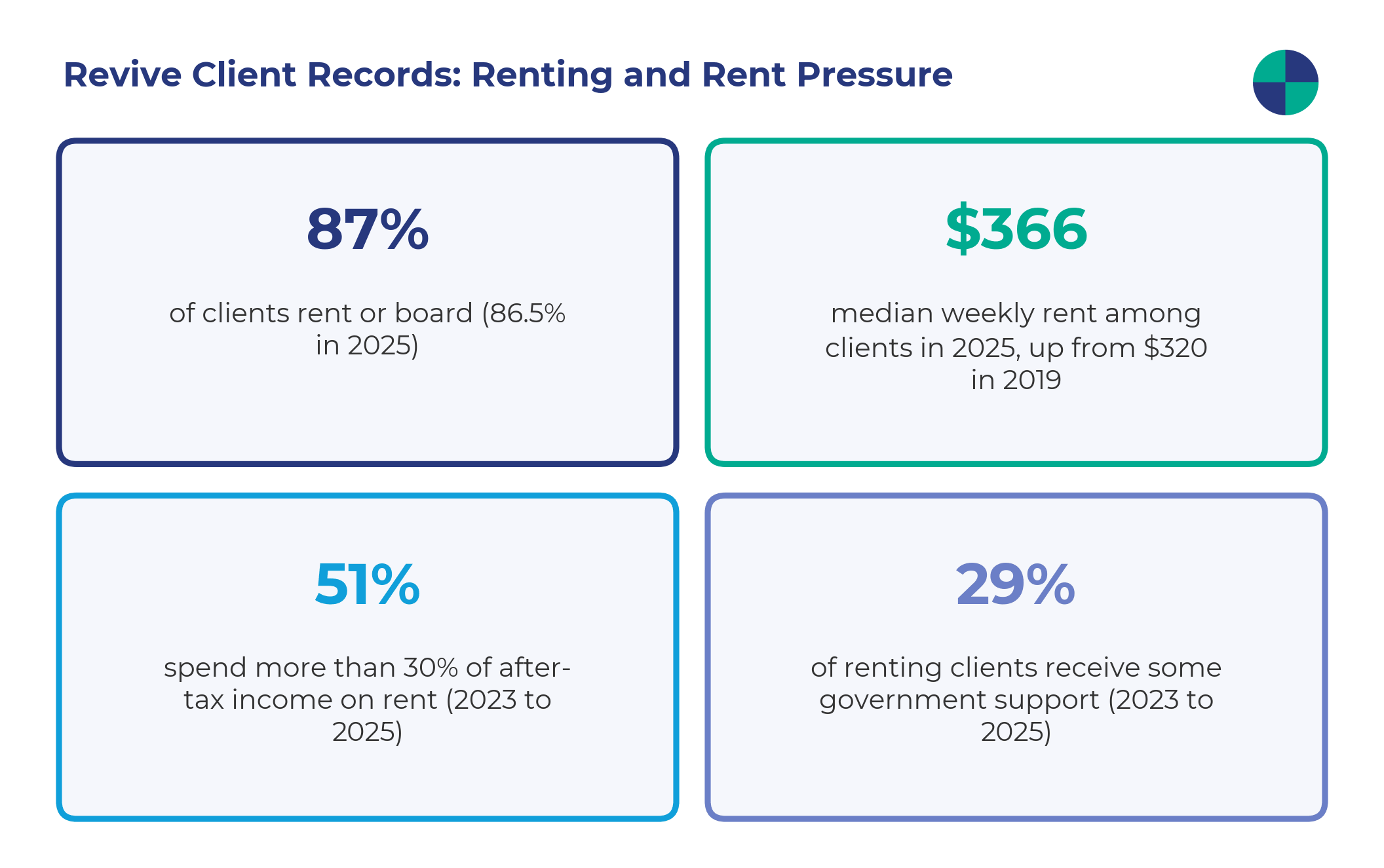
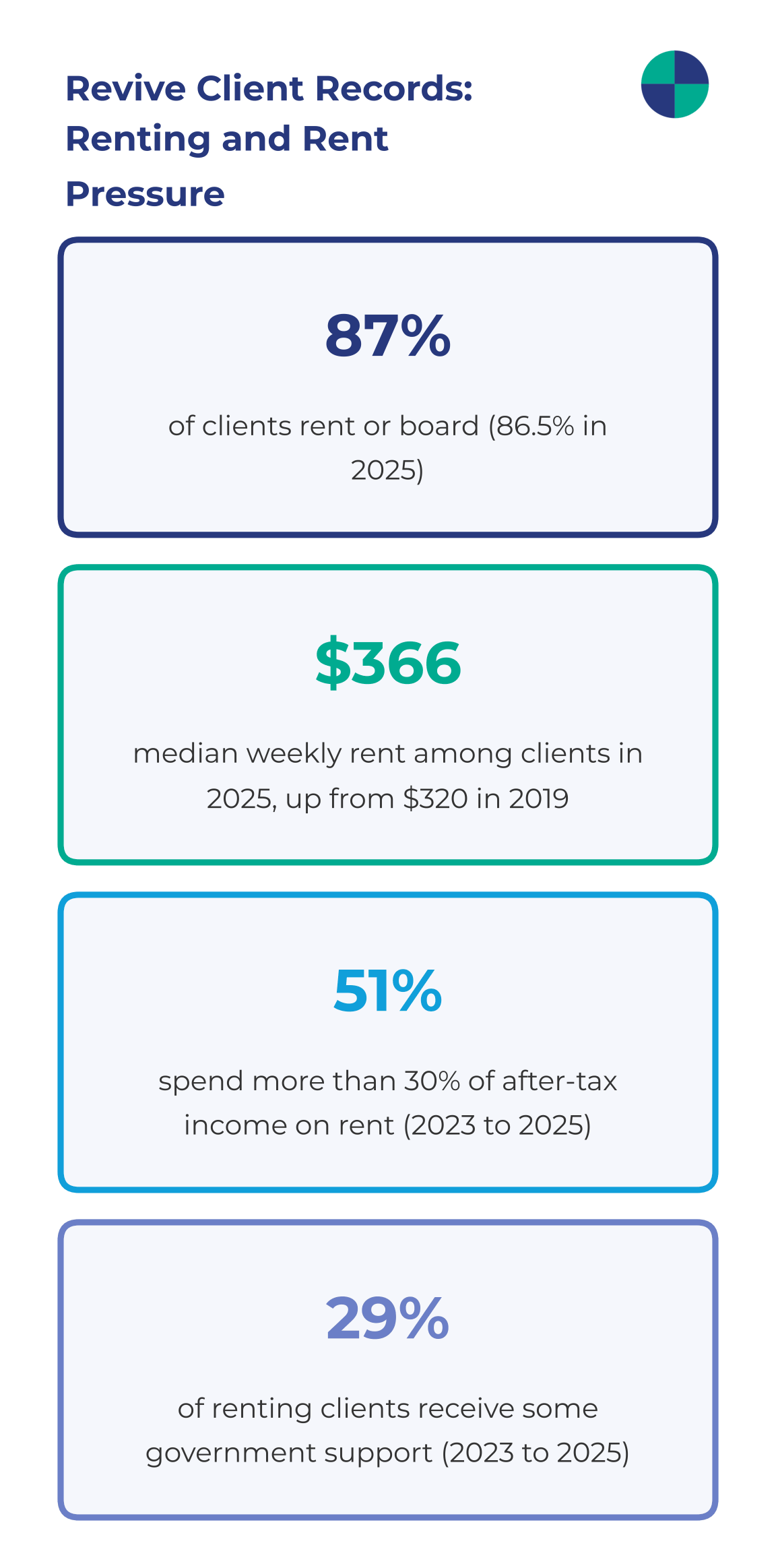
Figure 5. Revive Financial client records: housing (all years, 2025), median rent (2025 vs 2019), rent share of income and government support (2023 to 2025).
Across all years, 87% of Revive clients rent or board (that figure was 86.5% in 2025). The median rent they report rose from $320 a week in 2019 to $366 in 2025, an increase of about 14%. Among renting and boarding clients, 51% spend more than 30% of their after-tax income on rent, and 16.9% spend more than half.
One figure is particularly revealing here: only 29% of renting clients receive any government support, and 8.8% receive JobSeeker. This means that because Rent Assistance depends on an eligible payment, most renters we see wouldn’t qualify. That’s where Revive’s other forms of financial help come in.
What Does Rent Assistance Look Like in Practice?
Chloe’s Story (Illustrative)
Chloe, a hypothetical 26-year-old on JobSeeker, rents a unit for $200 a week, which is $400 a fortnight. When she moved, she updated her address and rent details with Services Australia.
At the rates from 20 September 2026, $400 a fortnight sits above the $157.80 threshold, so her Rent Assistance works out to $181.65 a fortnight, added to her payment.
This example is illustrative and doesn’t describe a specific individual. It assumes the person receives an eligible payment and that their rent counts. Actual amounts depend on your circumstances and Services Australia’s assessment.
What If Rent Is Still Too High?
Rent Assistance helps, but it rarely makes up for the shortfall entirely. Take a look at the stats: the median rent among Revive clients in 2025 was $366 a week ($732 a fortnight), so even the single maximum of $223.80 would only cover about 31% of that.
If rent arrears are building, do these three things as soon as possible:
- Speak to your landlord or agent early
- Call the National Debt Helpline on 1800 007 007 for free financial counselling
- Check Moneysmart (moneysmart.gov.au) for budgeting tools
If unsecured debts such as credit cards, buy now pay later, or personal loans are adding to the squeeze, Revive Financial offers a free, no-obligation assessment. Any option we discuss depends on your circumstances and on creditors agreeing.
A Part 9 Debt Agreement is listed on the public National Personal Insolvency Index and on your credit report, may not release every debt, and can end if you don’t meet repayments. Debt Agreements carry fees, which our Success Specialists explain in writing before you decide.
Before You Check Your Payment
Commonwealth Rent Assistance is one of the simplest ways to ease rent pressure, partly because you don’t have to actually apply. But you must be eligible. Services Australia needs your current address and rent, and your main payment must qualify.
Check your details in your Centrelink account today, tell Services Australia the moment your rent changes, and treat Centrelink rent assistance as something to review whenever your address, rent, or payment changes.
General information only. This article isn’t financial, legal or tax advice, and Revive Financial can’t advise on your superannuation or Centrelink entitlements. Rules, rates and figures are as at October 2026 and can change, so check the sources named and your own provider. Outcomes vary and depend on your circumstances and, for debt options, on creditor agreement. Revive Financial: RDAA 1337 (Debt Agreement content) and ACL 503321 (credit content). Last updated: 8 October 2026.