
 Brett Gavin
Debt agreements come in many forms. Unfortunately, there’s no one-size-fits-all answer to which is the best option for everyone, or which costs less over time. It depends on many factors. For example, on what each creditor agrees to, on the fees that apply, and on what happens if life circumstances change along the way.
We’re not here to pick a winner. This guide offers a clear and sensible comparison between an informal agreement and a Part 9 Debt Agreement. It shows what decides the cost and sets out the precise consequences of each, so you can ask better questions going into any consultation.
This is general information only. It’s not financial or legal advice. For free, independent help comparing options, you can call the National Debt Helpline on 1800 007 007.
What Is the Difference Between an Informal Agreement and a Part 9 Debt Agreement?
An informal agreement is a private arrangement between you and your creditors. It isn’t legally binding. Each creditor decides for itself whether to agree, and the terms can change. A Part 9 Debt Agreement is a formal arrangement under the Bankruptcy Act. If creditors accept your proposal, all your unsecured creditors are bound by it. It can be a good alternative to bankruptcy and can suit someone who can repay part of their debts but not all of them.
This table breaks down the main differences in simple terms:
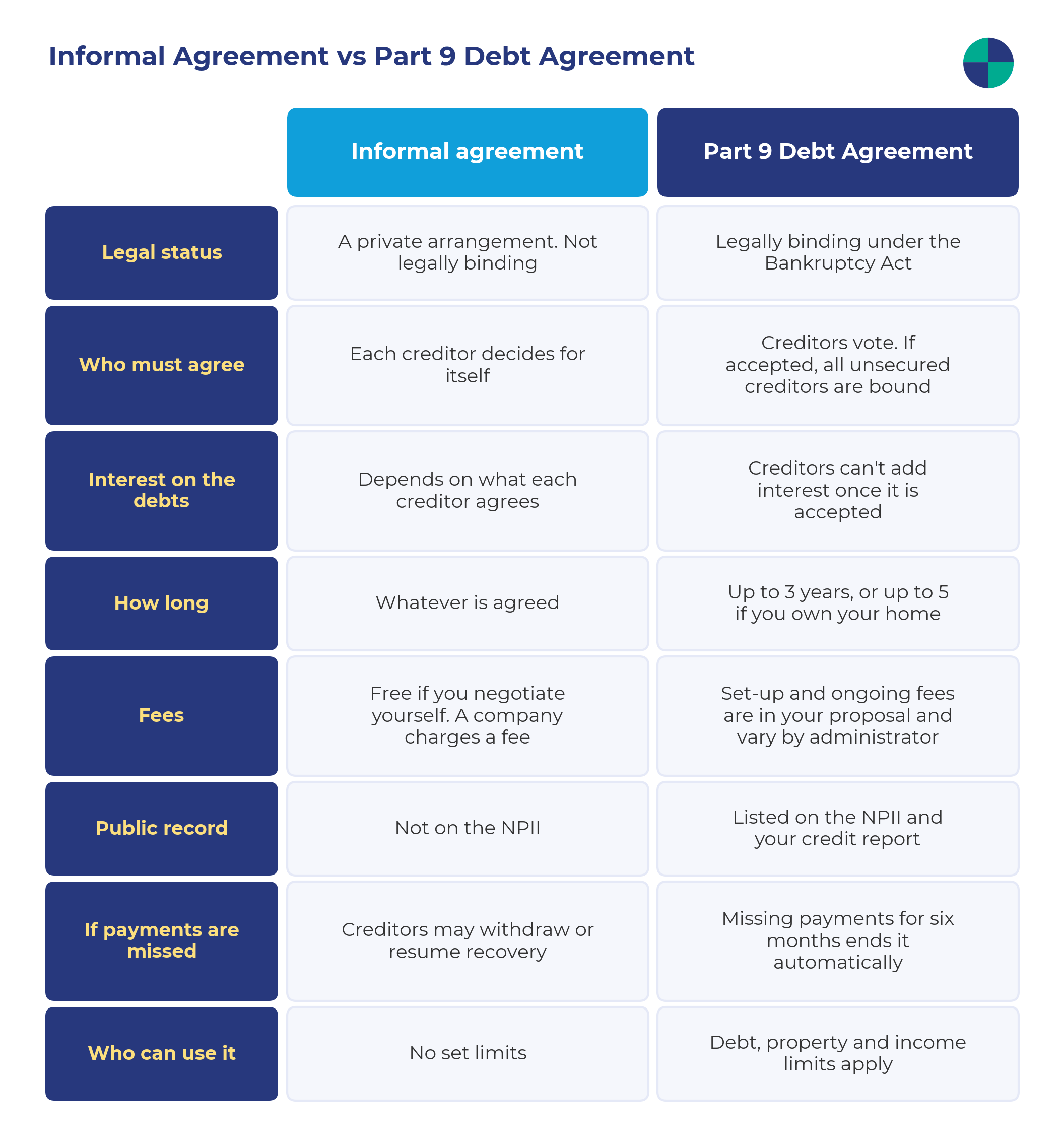
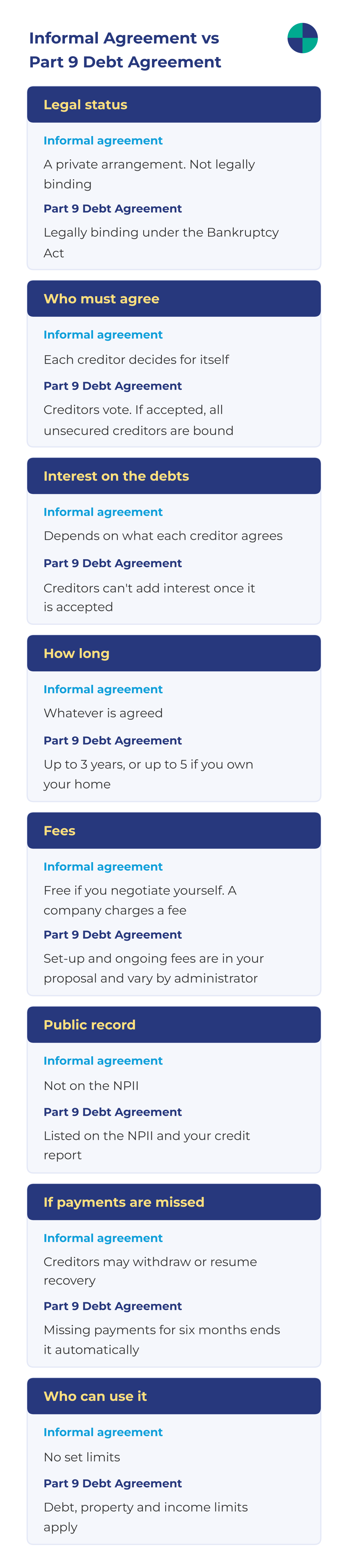
Figure 1. An informal agreement and a Part 9 Debt Agreement compared. Sources: Australian Financial Security Authority; Financial Rights Legal Centre; Legal Aid NSW, accessed October 2026.
Both types of debt agreement can carry lasting consequences. Read on, as we’ll set those out below.
What Decides Which One Costs Less Over Time?
The monthly payment is the most obvious cost, but it’s not the only thing that decides overall cost. There are six other cost factors that really matter:
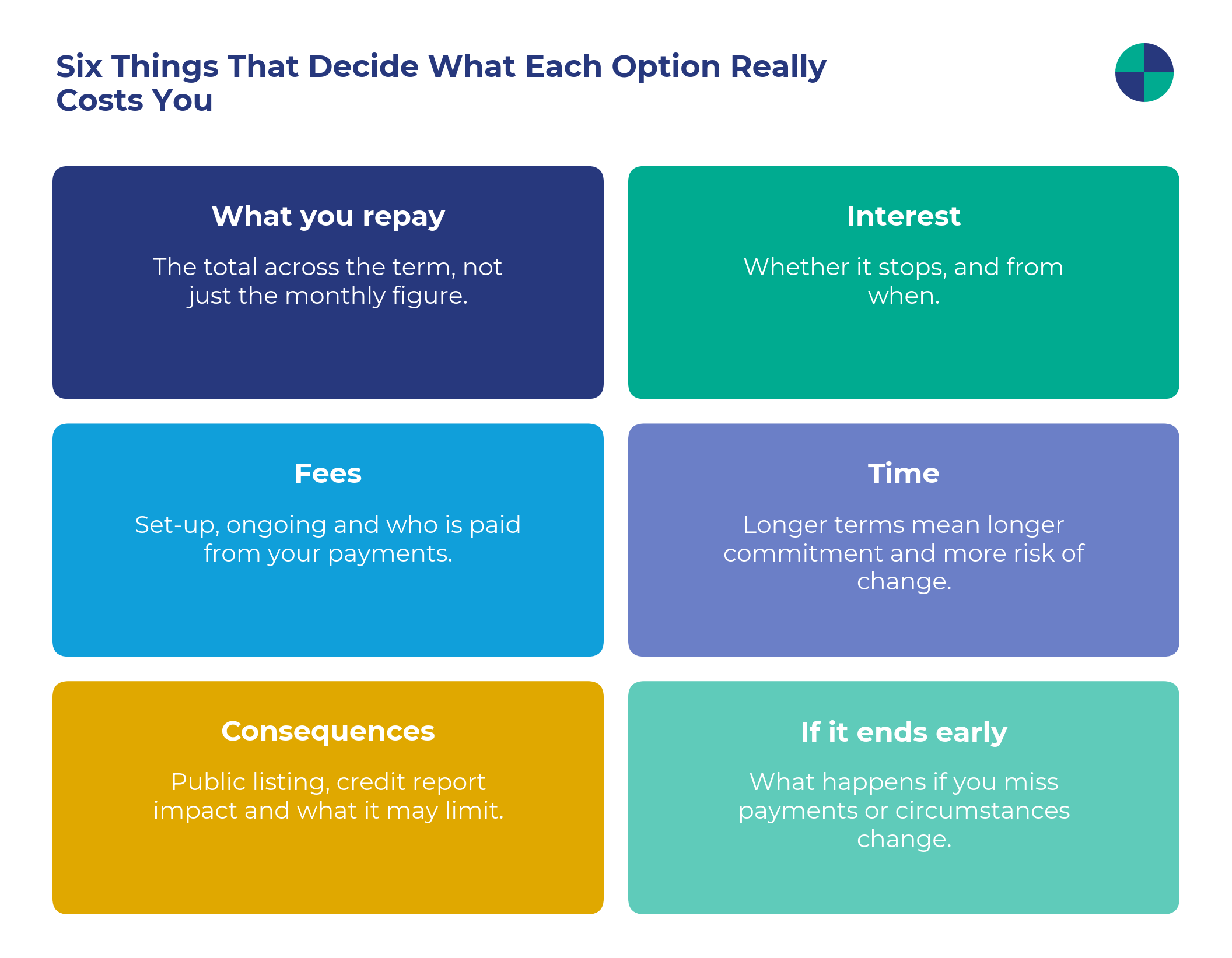

Figure 2. Six things that decide what each option really costs you.
Fees
You can ask your creditors for a hardship arrangement yourself at no cost, and free financial counselling services can help.
A company will charge a fee if it negotiates an informal agreement for you. With a Part 9 Debt Agreement you use a registered administrator, and the total set-up fee and any ongoing fees must be included in your proposal.
Fees differ between administrators, so compare them before you commit.
Interest and what you repay
Once creditors accept a Part 9 Debt Agreement, they can’t add interest to the debts included. In an informal agreement, whether interest stops or reduces depends on what each creditor agrees.
Under a Part 9 Debt Agreement, creditors may also agree to accept less than the full amount you owe. This isn’t guaranteed and it depends on your proposal and their vote.
Time
A Part 9 Debt Agreement can run for up to three years, or up to five if you own your home. An informal agreement runs for whatever is agreed. Longer terms can lower each payment, but they can raise the total cost.
- Shorter term (illustration only): $300 a fortnight for 3 years, $23,400 repaid in total
- Longer term (illustration only): $250 a fortnight for 5 years, $32,500 repaid in total
Illustration with made-up figures to show the effect of time. It doesn’t describe either option’s actual cost, which depends on creditor agreement, fees and your circumstances.
Who Can Use a Part 9 Debt Agreement?
A Part 9 Debt Agreement has eligibility limits. Most notably:
- Your unsecured debts, divisible property, and after-tax income must all sit below set amounts (set out below)
- You can’t have been bankrupt or in a debt agreement in the past 10 years
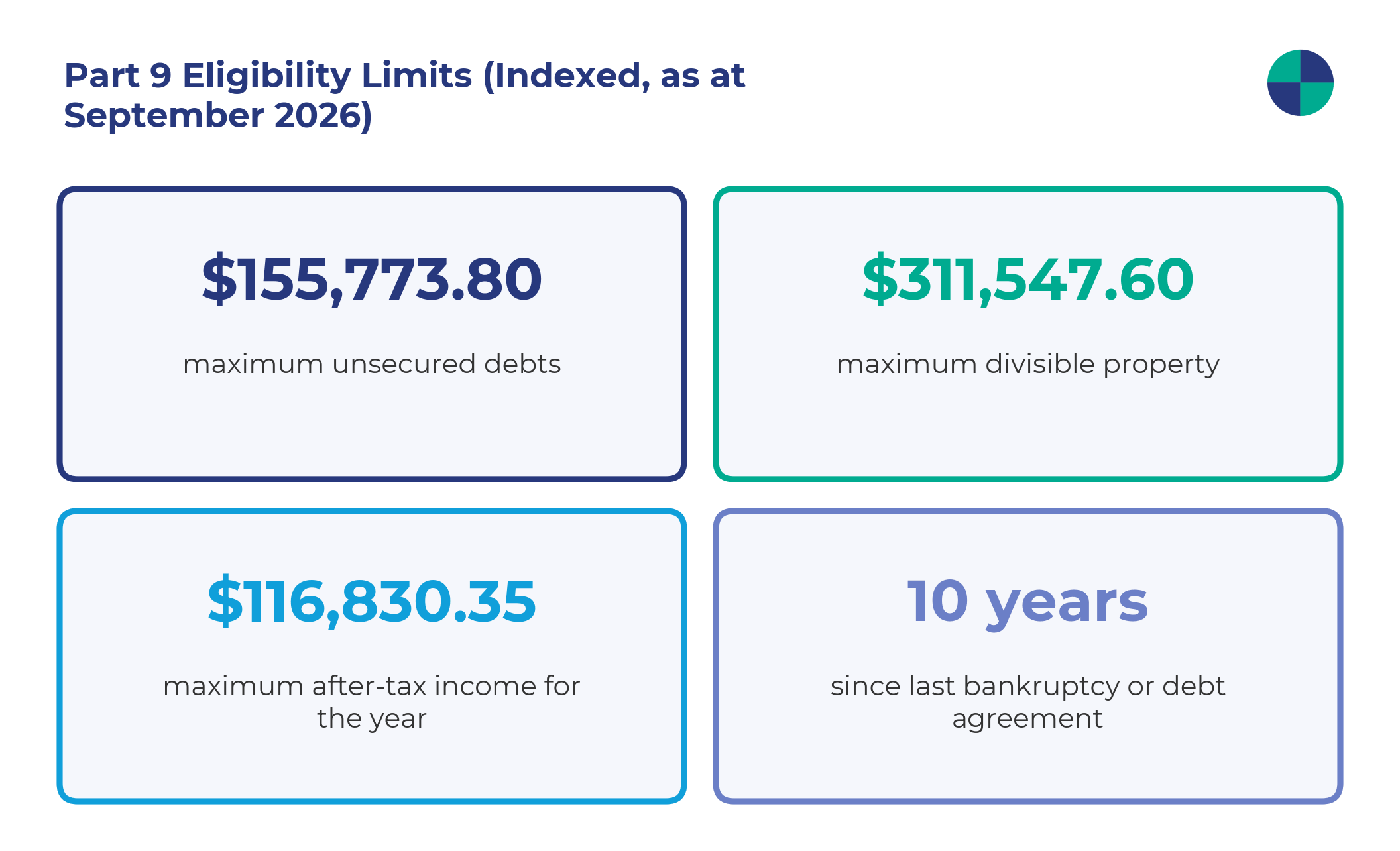
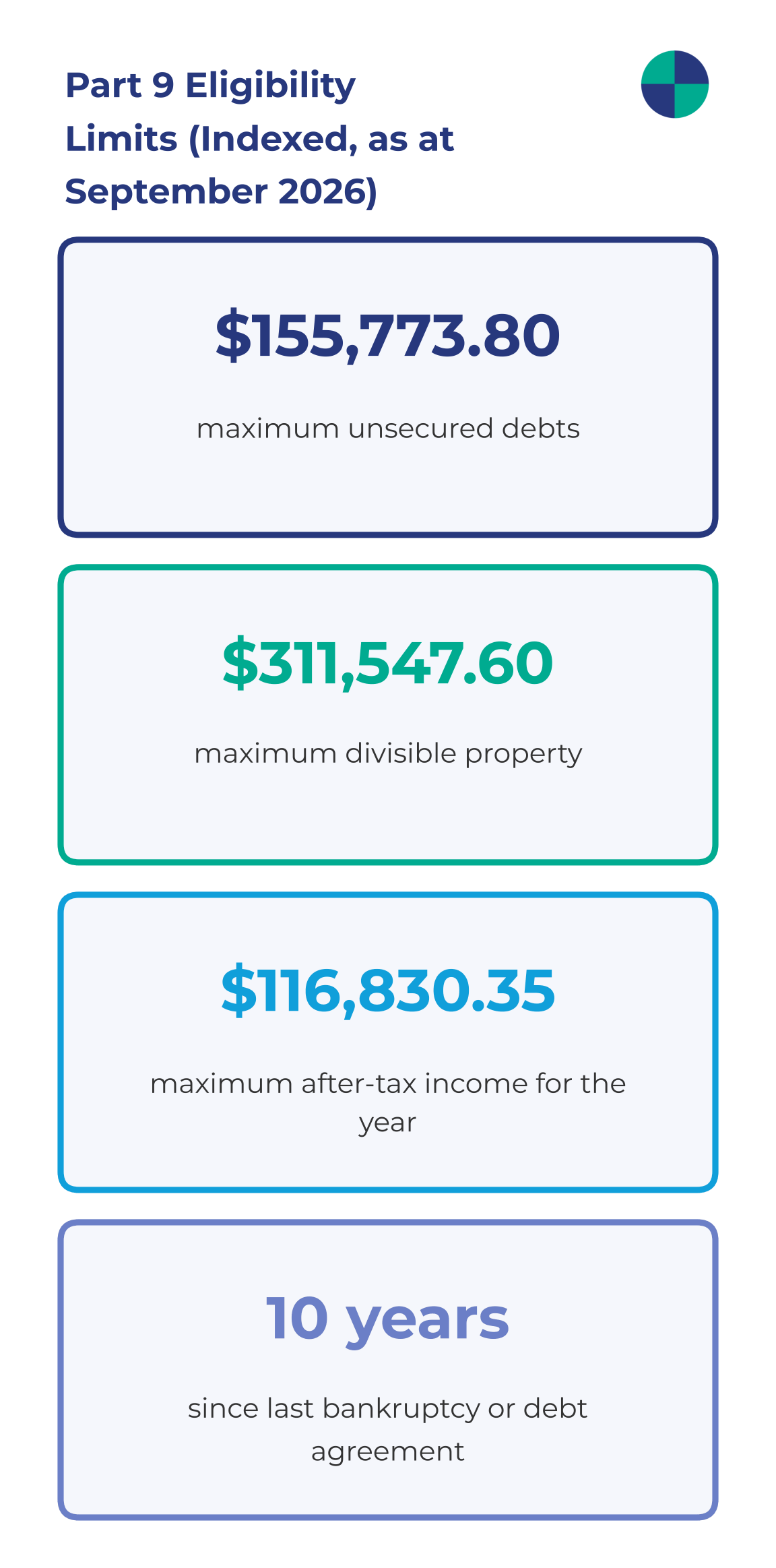
Figure 3. Part 9 Debt Agreement limits as at September 2026. Source: Australian Financial Security Authority, indexed amounts.
Most Revive clients are well inside the debt limit. In 2025, 99.2% of clients with a recorded debt total owed less than $155,773.80. The median was $10,040. That doesn’t cover income or property, which also count, but it shows the debt limit is rarely a problem.
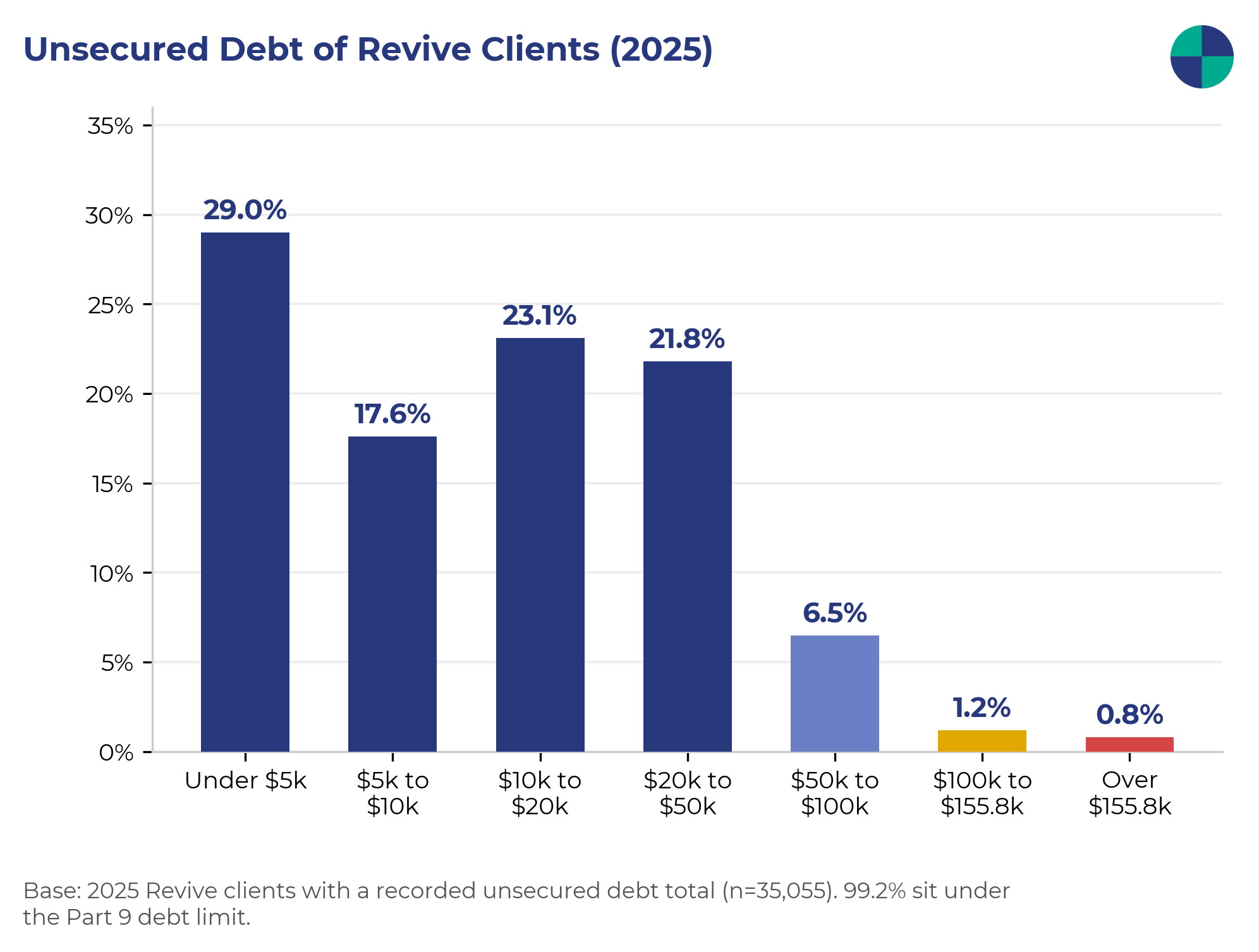
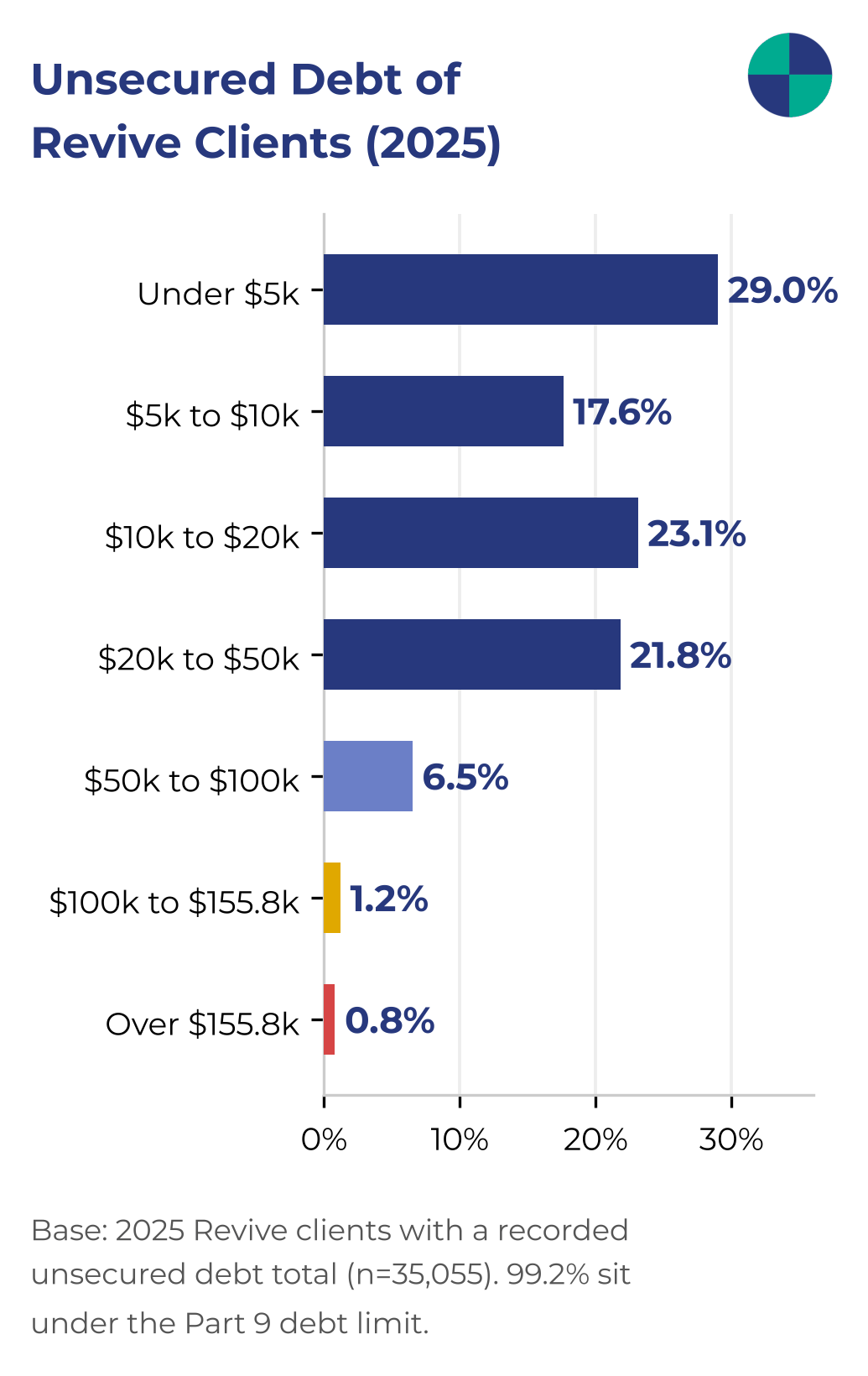
Figure 4. Unsecured debt of Revive clients, 2025. Source: Revive Financial client records (clients tend to have some capacity to repay; not all Australians in debt).
What Are the Downsides of Each Option?
Here are some of the main drawbacks of each type:
Informal agreement
- It isn’t legally binding, so a creditor can change course or resume recovery.
- Each creditor is negotiated separately, which can take time.
- Interest and fees depend on what each creditor agrees.
- A company that negotiates for you will charge fees.
Part 9 Debt Agreement
- It’s listed on the public National Personal Insolvency Index and on your credit report.
- It may not release every debt. Some debts still have to be paid.
- A debt agreement is an act of bankruptcy under the Bankruptcy Act, and it ends automatically if you miss payments for six months.
- It can affect certain licensed or regulated occupations, and lenders can see it.
- Set-up and ongoing fees apply, and they vary by administrator.
What Does Each Option Mean for Everyday Life?
Day to day, the biggest difference is who you deal with. Once a Part 9 Debt Agreement is accepted, your unsecured creditors can no longer contact you about the debts it includes, and you make your payments to the administrator. With an informal agreement, you or your negotiator stay in contact with each creditor and collection can continue until each one confirms its terms.
Either way, collectors still have to follow the ASIC and ACCC Debt Collection Guideline, including the contact hours and the right to ask for confirmation in writing.
What Happens If You Miss Payments?
With an informal agreement, there’s no automatic rule. The creditor may accept a new plan, or it may resume collection, so the safest move is to call as soon as you anticipate a problem.
With a Part 9 Debt Agreement, the rules are firmer. If you miss payments for six months, the agreement terminates automatically and the NPII entry then follows the termination timeframes rather than the completion ones. You can propose a change if your situation shifts, but affected creditors vote on it and the payments must still meet the income test.
What about bankruptcy?
We’re not including bankruptcy in our comparison here, but it’s a valid third option. Here are some quick facts about bankruptcy:
- It usually lasts three years and a day
- Your name stays on the NPII permanently
- You’ll have a credit report listing for five years
- It has no minimum debt threshold
A debt agreement is generally positioned as an alternative. The right choice depends on your assets, income, and goals.
Do you have to try an informal agreement first?
There’s no rule that says you must, but starting with the free steps makes sense. Asking your lender for a hardship arrangement costs nothing, and it gives you information about what your creditors are prepared to do before you consider a formal option.
How Do the Fees Actually Work?
With a Part 9 Debt Agreement, you make payments to the administrator, who then pays your creditors. The administrator’s set-up fee, which may include the lodgement fee paid to the Australian Financial Security Authority, and any ongoing fees, must be in your proposal. That means the fees are visible before creditors vote, but they still reduce what reaches your creditors or add to what you pay.
With an informal agreement, there are two routes:
- You can ask your creditors yourself at no cost
- You can pay a company to negotiate for you, which will charge a fee
Free financial counselling services can negotiate on your behalf too, but they can’t take money from you to pass on to creditors. It’s important to compare the fee against what you’d realistically save.
Can you change your mind or your provider?
You can change administrator, although you may need to pay additional fees. You can also propose to change the terms of a Part 9 Debt Agreement once it’s running. However, creditors vote on that. Also, the payments must still meet the income-to-payment test.
How Does Each Option Affect Your Credit and Borrowing?
A Part 9 Debt Agreement appears in two places:
- Your credit report
- The National Personal Insolvency Index
Lenders can see both. Approval is always the lender’s decision, and they may be less willing to lend while it’s there.
An informal agreement is different. For a start, it isn’t recorded on the NPII. How it shows on your credit report depends on the creditor and the reporting rules. Ask each creditor how it will record the arrangement before you agree.
Which Questions You Should Be Asking
The main question you should be asking depends on your exact situation. The list below lays those out.
This isn’t a recommendation. It’s a way to map a potential debt solution.
- One or two debts, and income likely to recover: Could a lender hardship arrangement be enough? Worth knowing: Asking is free.
- Several creditors, and you can’t repay in full in a realistic time: Is a formal option worth exploring? Worth knowing: Check the limits, fees and listing.
- Debts above the Part 9 limit: Part 9 isn’t available. What else is? Worth knowing: A free counsellor can map the options.
- Behind on a home loan: Neither option covers secured debts. Worth knowing: Talk to the lender and a free counsellor.
What Happens After a Part 9 Debt Agreement Ends?
Here’s what happens when a Part 9 Debt Agreement ends:
- Most of the debts included are released
- Some debts may still need to be paid
- The entry comes off the NPII after the timeframes set out in our guide to the National Personal Insolvency Index
Check the dates with your administrator and check your credit report separately.
How Does a Part 10 Personal Insolvency Agreement Compare?
A Part 10 personal insolvency agreement is a different formal option. It has no debt, income, or property limits, and it’s listed on the NPII permanently. It sits outside this comparison, but you should know it exists if you’re above the Part 9 limits.
What Does This Look Like in Practice?
Liam’s Story (Illustrative)
Liam, a hypothetical 31-year-old, owed money on one credit card and one personal loan. His income had dipped, but he expected it to recover. He asked each lender for a hardship arrangement and agreed reduced repayments with both, then kept the arrangement written down.
It worked because both lenders agreed and his income recovered. If a lender had refused, or his income had fallen again, he’d have needed another plan.
Sophie’s Story (Illustrative)
Sophie, a hypothetical 45-year-old, had five creditors and couldn’t see how to repay in full. After talking to the National Debt Helpline she asked about a Part 9 Debt Agreement and checked the limits. She read the fees, the listing and the six-month default rule in writing before deciding.
She understood that her creditors had to accept the proposal and that it would be listed publicly. Whether it suited her depended on her whole situation, not on a single number.
Both examples are illustrative and don’t describe specific individuals. Outcomes vary and depend on individual circumstances and creditor agreement.
Questions to Ask Before Signing an Agreement
Whether you’re talking to a registered debt agreement administrator or a company that negotiates informal agreements, these questions bring the real costs into the open:
- What’s the total I’ll repay, and how much of it goes to fees?
- Which of my debts would be included, and which wouldn’t?
- How long will it run?
- What happens if my income drops or I miss a payment?
- How will it be recorded publicly and on my credit report, and for how long?
- Are you a registered debt agreement administrator, and what’s your registration number?
- Can I have everything in writing before I decide?
- What are the alternatives, including the free ones?
What are the warning signs when comparing providers?
These red flags could show a provider is unprofessional:
- Pressure to decide quickly.
- Promises of a particular result, or of certain approval.
- Reluctance to explain the NPII listing and credit report impact in plain terms.
- Fee descriptions that are vague or keep changing.
- No mention of free alternatives such as lender hardship teams or the National Debt Helpline.
- Any suggestion that a government body has endorsed the product.
Reputable providers are comfortable with these questions. If you don’t get clear answers, that tells you something.
A Sensible Order of Questions Before You Choose
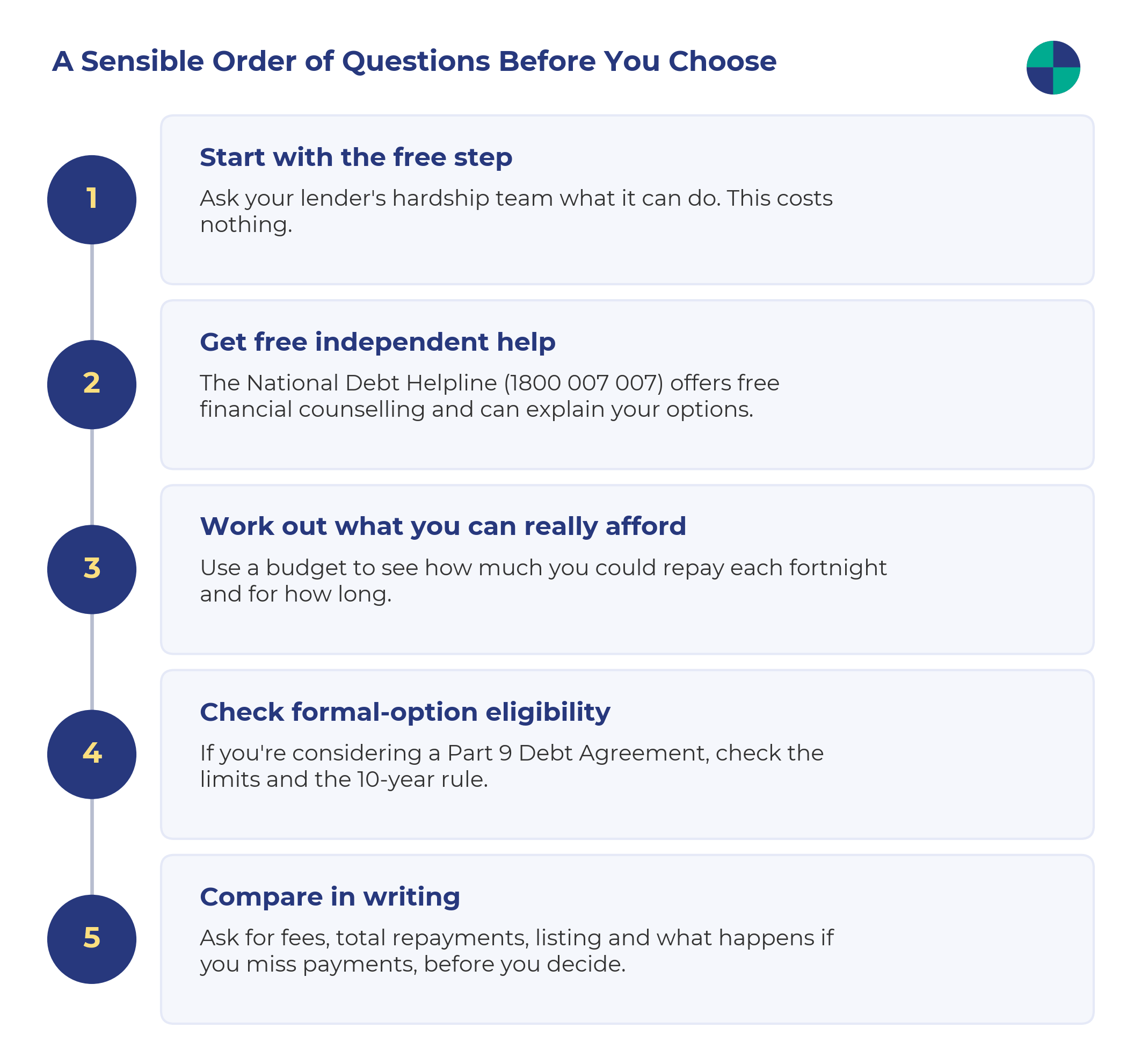
Figure 5. A sensible order of questions before choosing between an informal agreement and a Part 9 Debt Agreement.
Where Can You Get Free Help Comparing Debt Agreements?
The National Debt Helpline (1800 007 007, ndh.org.au) provides free financial counselling. Moneysmart (moneysmart.gov.au) explains the steps, costs and long-term effects of bankruptcy and debt agreements, and the Financial Rights Legal Centre publishes a fact sheet on debt agreements.
Revive Financial offers a free, no-obligation assessment, and we can talk through a Temporary Hardship Plan, an Informal Agreement or a Part 9 Debt Agreement. Each depends on your circumstances and on creditors agreeing, and none suits everyone. Debt Agreements carry fees, which our Success Specialists explain in writing before you decide. We can’t promise a particular result.
Before You Compare Quotes
Whether a Part 9 Debt Agreement or an informal agreement costs less over time depends on the fees, the interest, the term, and the creditors’ decisions, not on which label sounds cheaper. Ask for the total repayments, every fee, and the consequences in writing, then take the comparison to a free financial counselling service before you decide.
General information only. This article isn’t financial, legal or tax advice, and Revive Financial can’t advise on your superannuation or Centrelink entitlements. Rules, rates and figures are as at October 2026 and can change, so check the sources named and your own provider. Outcomes vary and depend on your circumstances and, for debt options, on creditor agreement. Revive Financial: RDAA 1337 (Debt Agreement content) and ACL 503321 (credit content). Last updated: 8 October 2026.