

 Brett Gavin
Losing your job is one of the biggest financial hits anyone can take. Even if you got a redundancy payment, it doesn’t last forever. Many of our clients find it drying up quicker than they expected, and when it does, they’re suddenly facing outstanding credit card balances and more. “Temporary” can soon turn into “a real problem”.
There’s good news, though. You’re not alone. Revive’s client records show that from 2019 to 2025, 22% named losing a job or a second job as a reason for their debt, and another 3% named a partner losing work. Our data puts us in a great position to explore this problem beyond “job loss causes debt” and help you access possible solutions.
The data has a lot to say about how the pattern moves with the economy, what it tends to look like along the way, and what helps. So if you’ve searched “lost my job in debt”, you’re in the right place. It’s time to get proactive.
How Does Debt After Job Loss Build Up?
Redundancy almost always means financial pressure. Even with notice pay or a payout, most households run on a monthly rhythm that relies on a steady wage. Rent or a mortgage, utilities, groceries, a car loan, and maybe a personal loan all need to be paid. These commitments remain, even when the income disappears. That’s a lot for anyone to deal with.
What surprised us is how often job loss is the main event rather than the last straw. Among clients who named loss of employment, only 15% also named overcommitment on credit. Far more also named relationship breakdown (23%) or illness (22%). Debt after job loss often sits alongside other life changes, not just earlier borrowing.
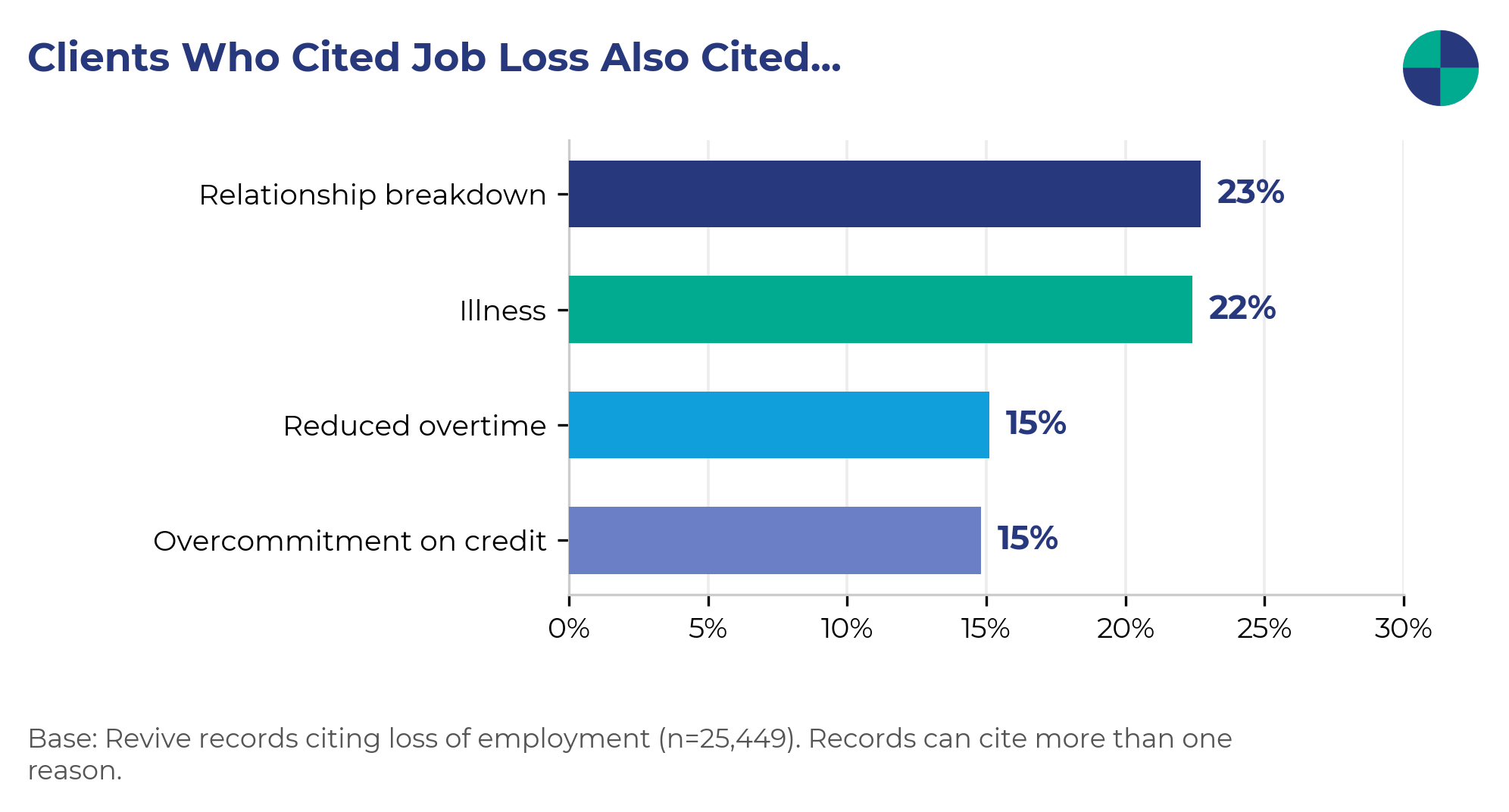
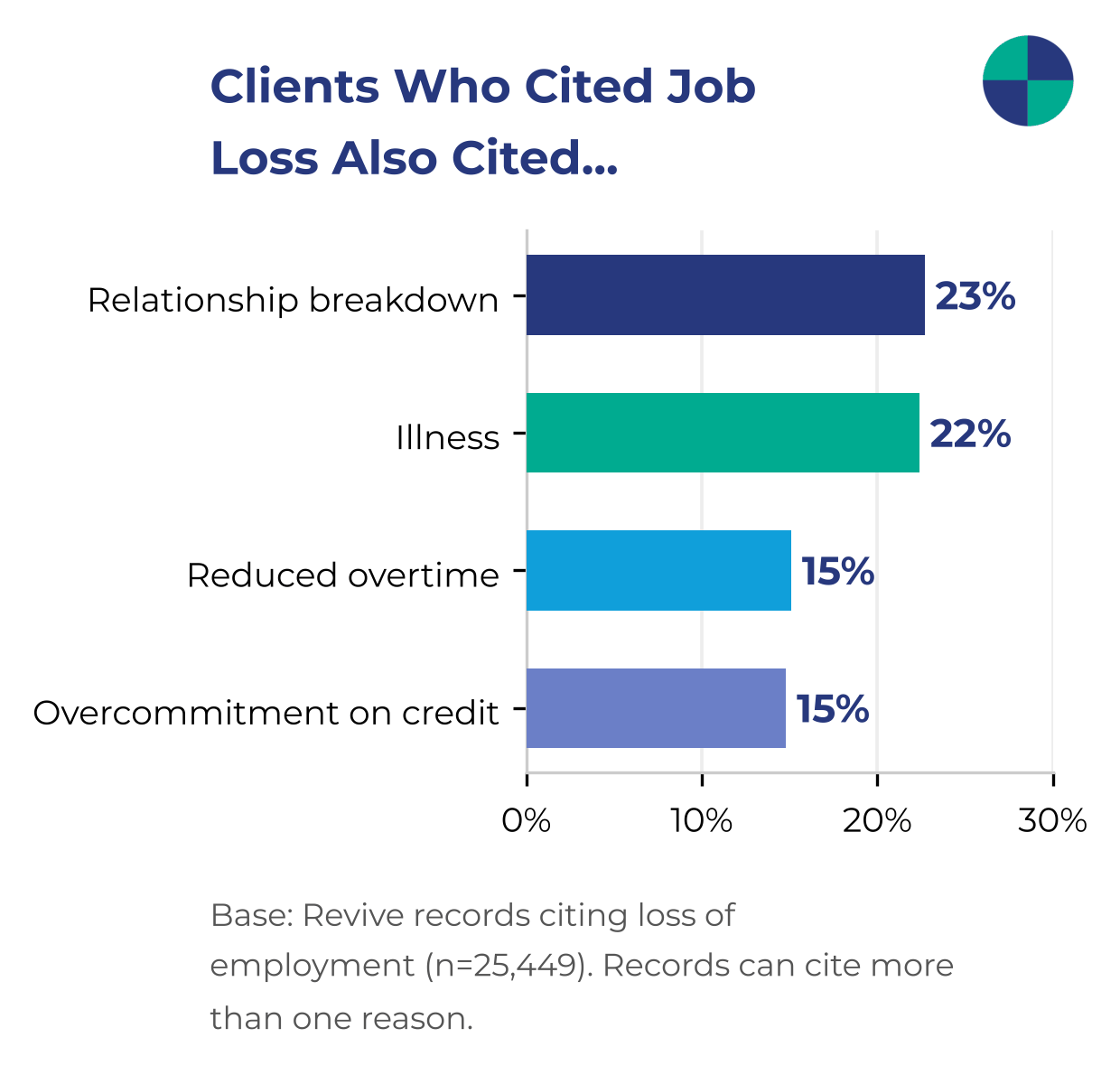
Figure 1. Other reasons named by clients who cited loss of employment. Source: Revive Financial client records, all years.
Why Does Debt After Job Loss Show Up a Year Later?
When we lined up our own year-by-year records against the national unemployment rate, a pattern appeared. Unemployment peaked in 2020. But the share of Revive clients naming job loss didn’t peak until 2021. That’s a full year later.
You can see this in the graph below:
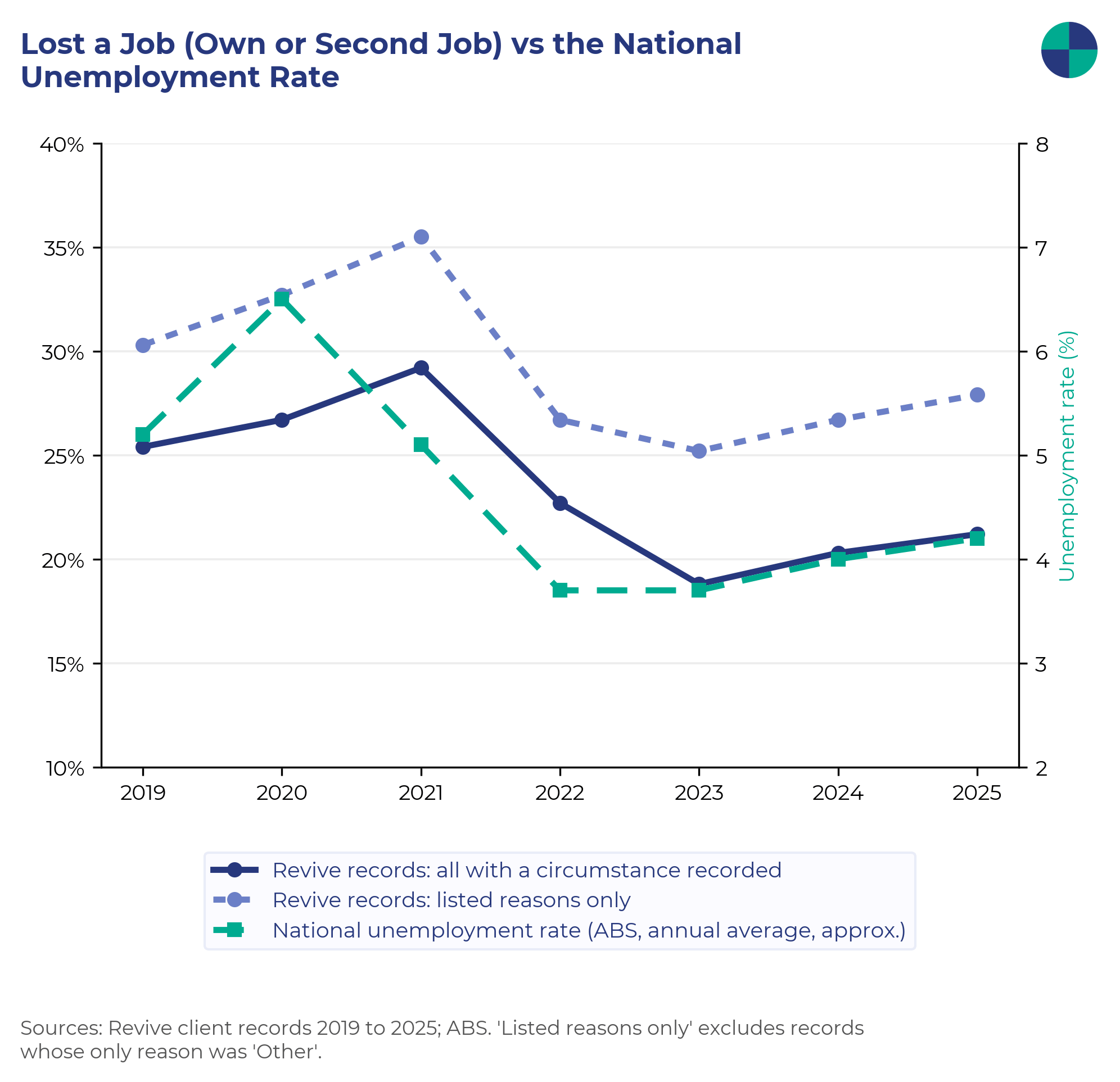
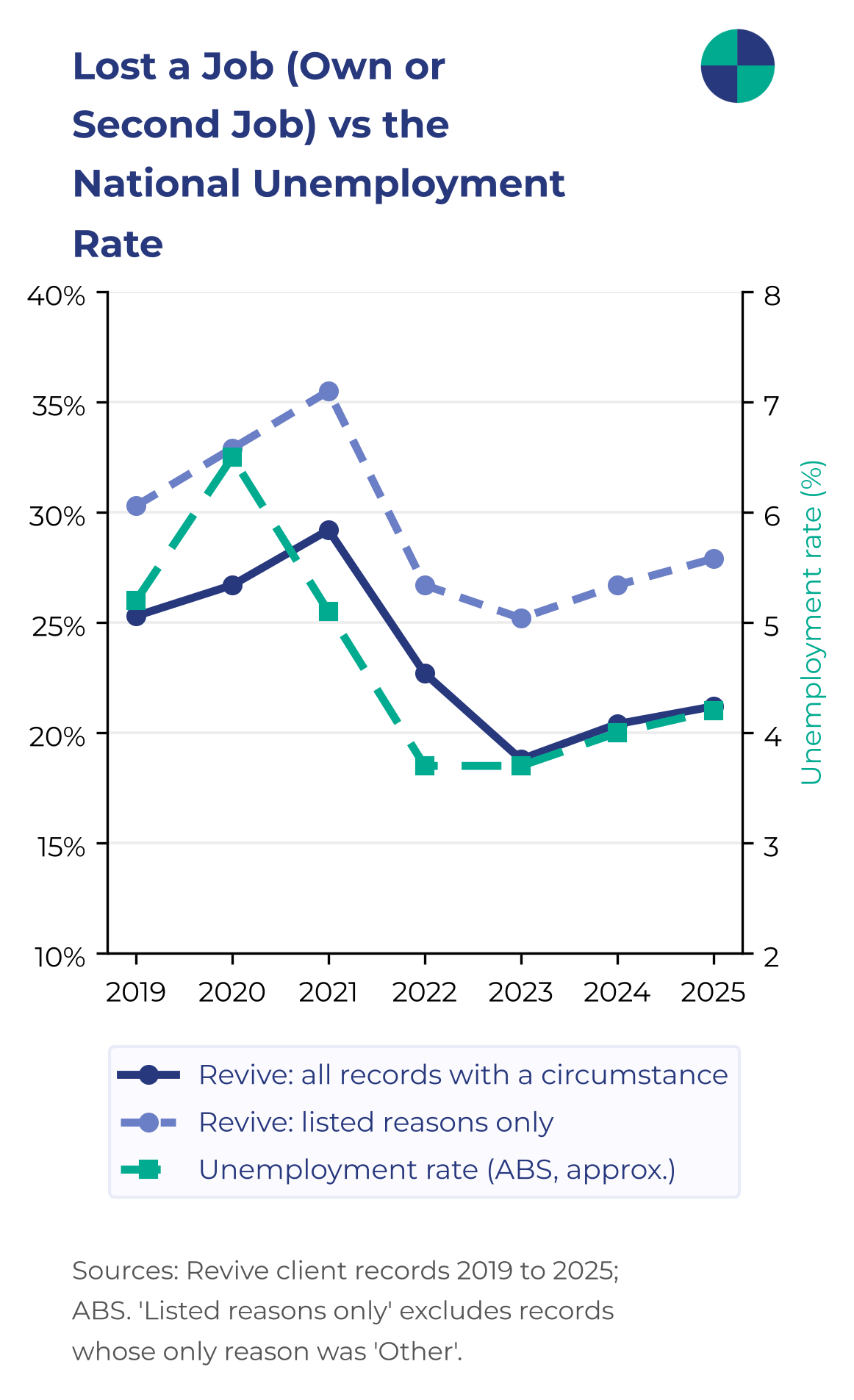
Figure 2. Clients naming loss of employment or loss of a second job, against the national unemployment rate. Sources: Revive Financial client records 2019 to 2025; ABS Labour Force Survey (annual averages, approximate).
The explanation behind the lag is actually pretty straightforward. Clients who’ve lost their jobs often work through savings first, then through available credit, and only then pick up the phone. The share peaked at 29.2% of records in 2021, fell to 18.8% in 2023, and has crept up to 21.2% in 2025. The dotted line shows records with a listed reason only, although it tells a very similar story.
Just note, however, that these are Revive’s own client records. Our volumes also reflect our marketing and conversion, so we’re not claiming a national count of people affected, only that the timing pattern is consistent in our data.
What Does the First Year After Job Loss Look Like?
Of course, every situation is different. However, we have enough data from our conversations to reveal a composite pattern:
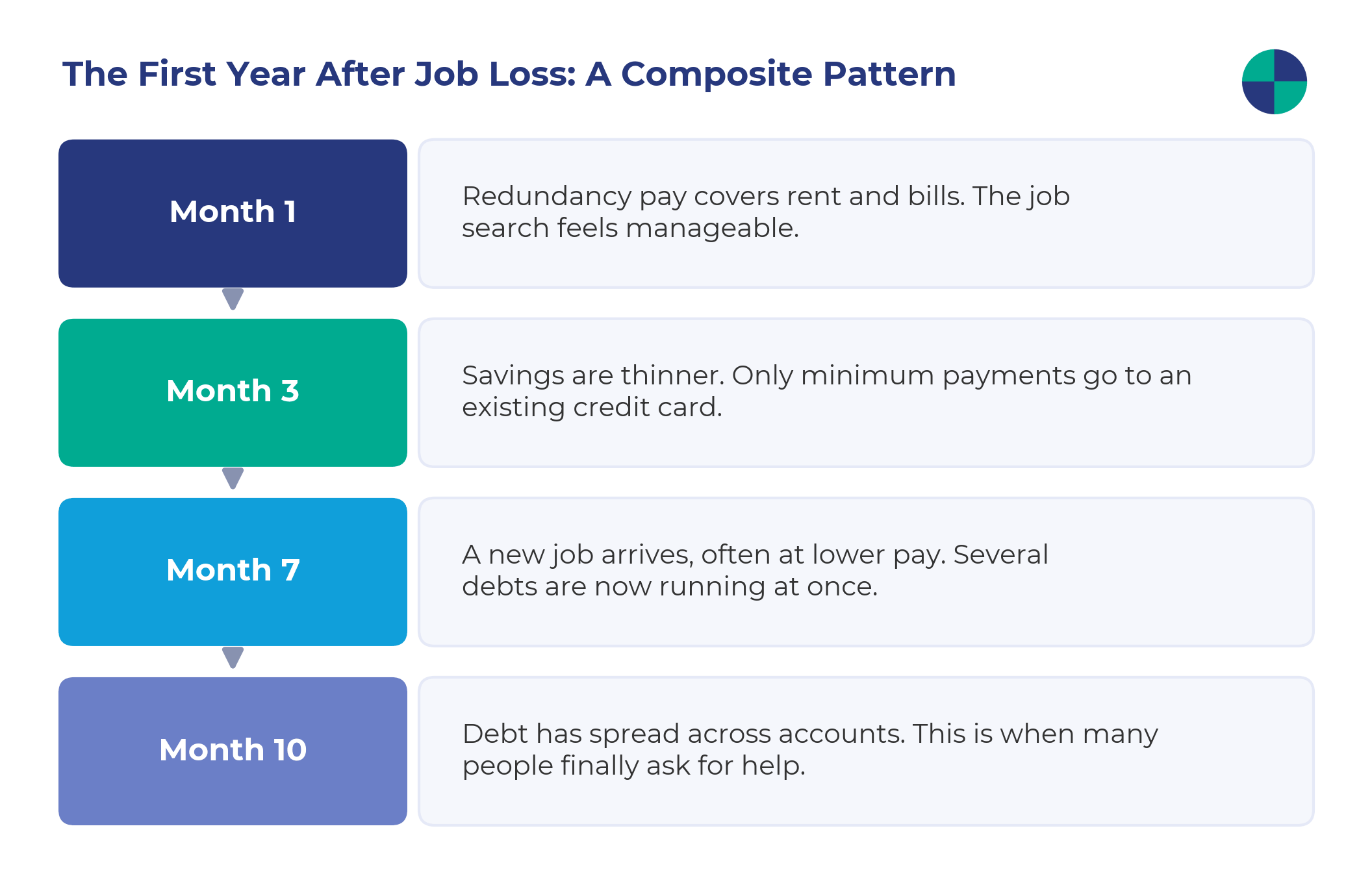
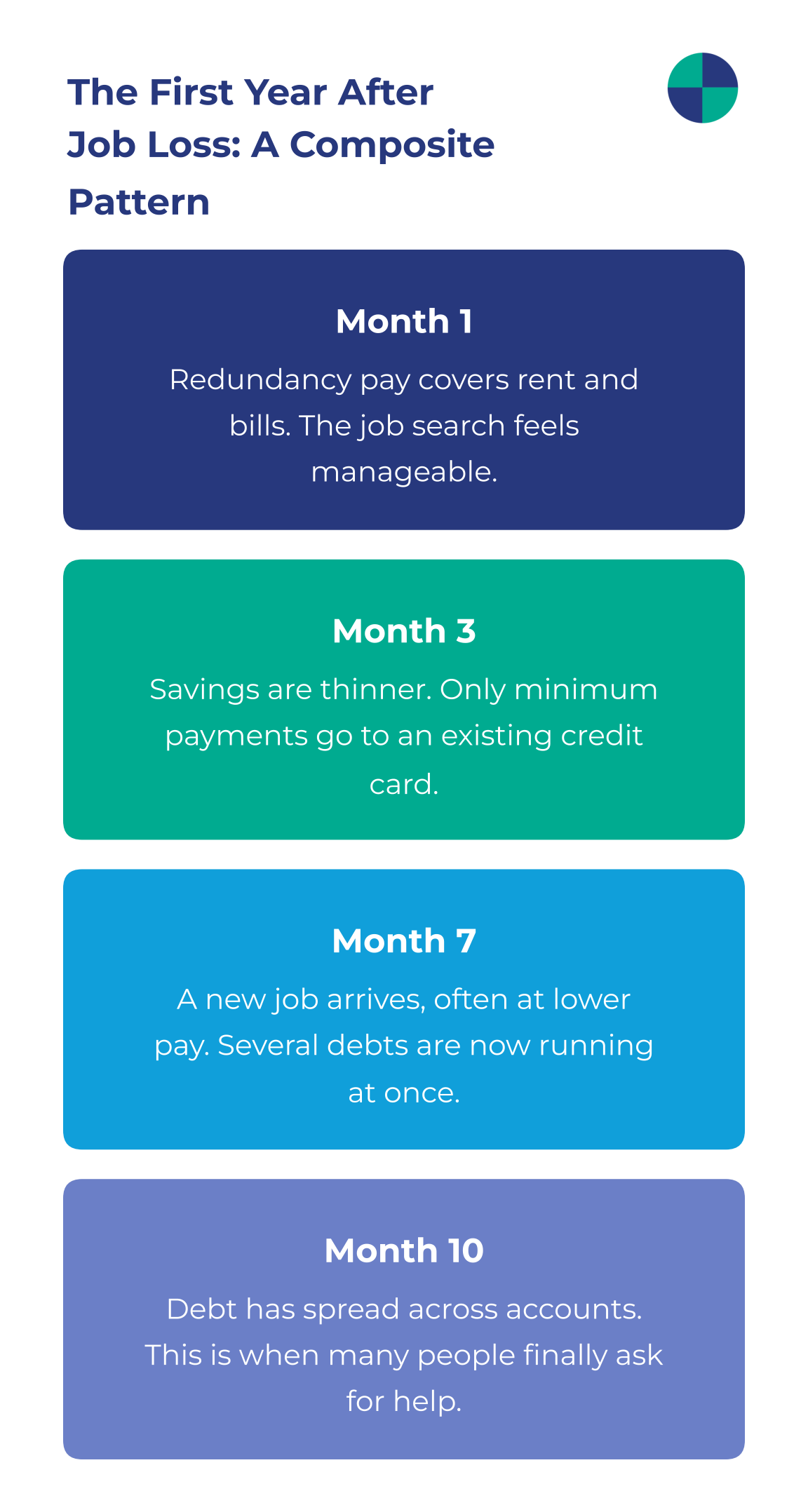
Figure 3. A composite timeline reflecting a pattern we see regularly. Not a specific individual.
Michelle’s Story (Illustrative)
Michelle, a hypothetical 38-year-old retail manager, was made redundant when her store closed. In month one, her payout covered rent and bills. By month three she was making only minimum payments on a credit card, telling herself she’d catch up once she found work.
By month seven she had a new job at lower pay, and two cards and a personal loan were running at once. She first looked into her options around month ten. Looking back, every earlier month had been a chance to ask for help.
This example is illustrative and doesn’t describe a specific individual. Outcomes vary and depend on individual circumstances and creditor agreement.
Are Most People Still Out of Work When They Ask for Help?
Actually, no. Our data shows something different, which was a surprise to us and contradicts what most people imagine:
Among clients who named loss of employment in 2023 to 2025, 61% were working full time when they contacted us, 26% were casual, and 14% part time. This shows that many people reach out after they’re back at work, once the debt from the gap has caught up with them.
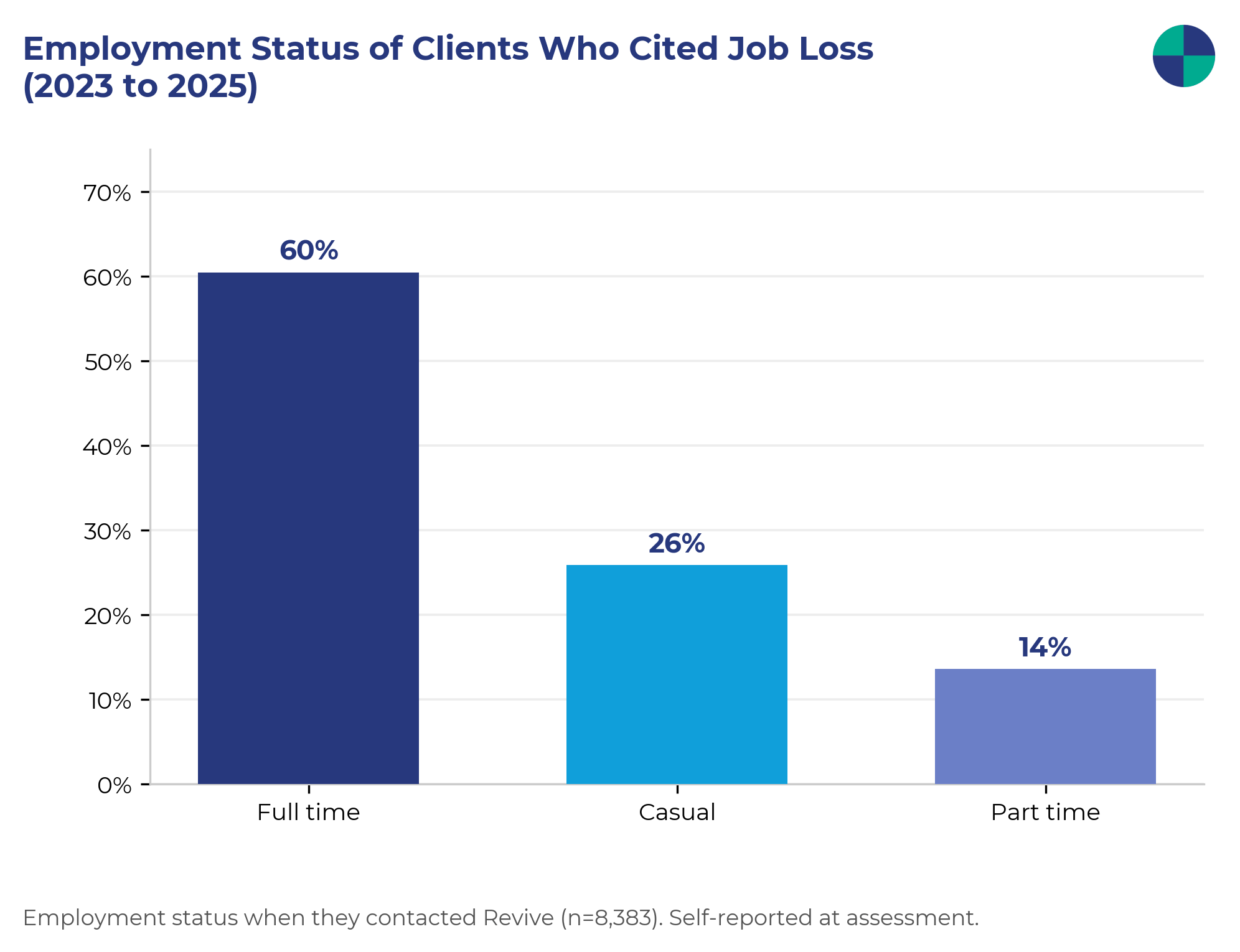
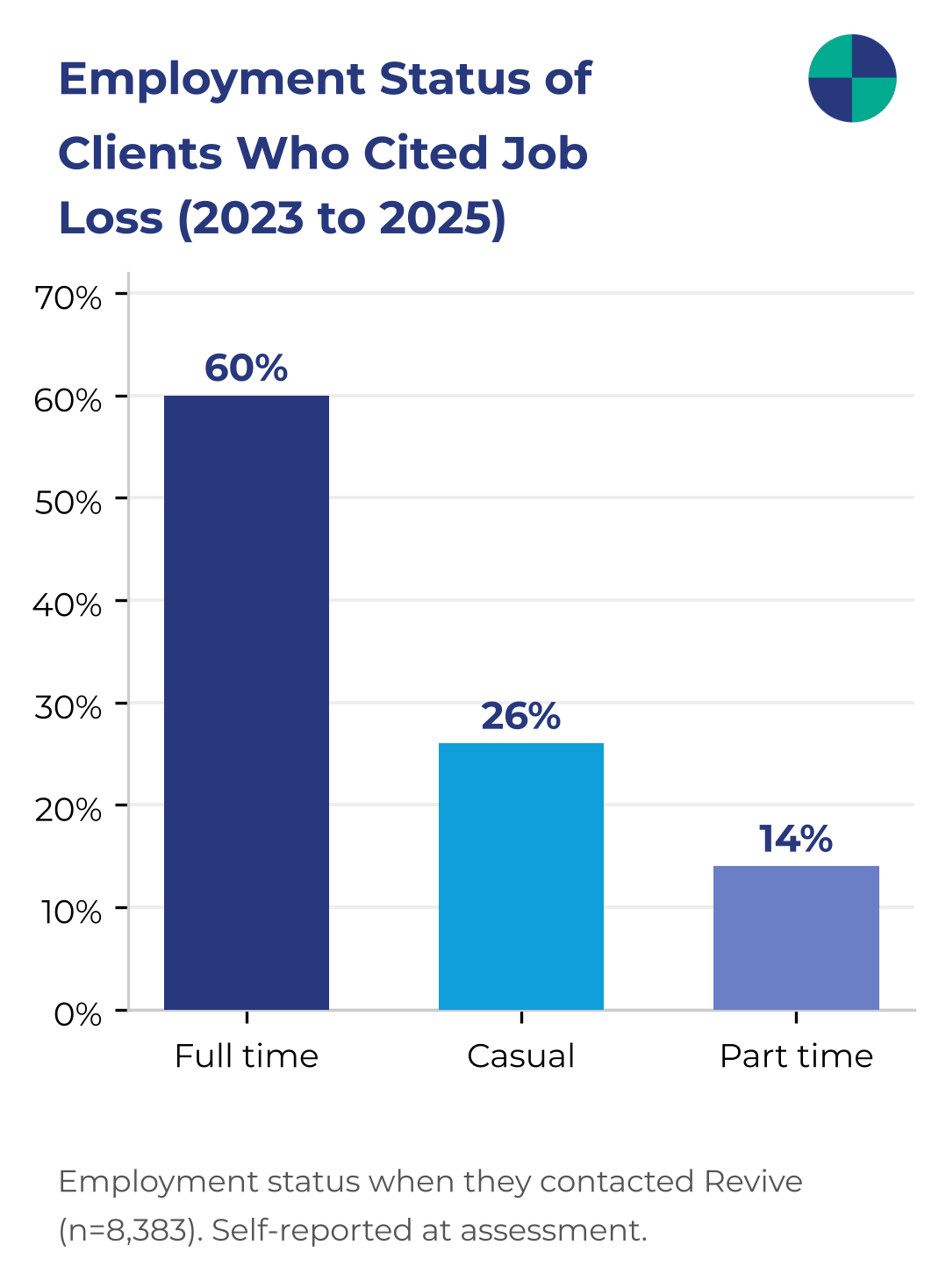
Figure 4. Employment status when clients who cited job loss contacted Revive, 2023 to 2025. Source: Revive Financial client records.
Job loss also doesn’t predict a bigger debt. In 2023 to 2025, the median unsecured debt for clients naming job loss was $15,000, against $16,000 for everyone else.
Does Job Loss Hit Casual Workers Harder?
Among Revive clients, it does. Between 2019 and 2025, the percentage of clients claiming loss of employment as a reason for their debt were:
- 26.7% of casual workers
- 11.3% of full-time workers
Casual and part-time workers also named reduced overtime or hours far more often (33% and 28%, against 14% for full-time workers).
Full-time workers told a different story. Their most common reason was overcommitment on credit (33%). For people with less secure hours, the trigger is more often a sudden drop in work. That matters because it shows debt after job loss can start well before a role formally ends, when shifts quietly thin out.
Dev’s Story (Illustrative)
Dev, a hypothetical 27-year-old casual warehouse worker, didn’t lose his job. His shifts just thinned from five a week to two, and nobody called it redundancy. For four months he covered the gap with a credit card and two buy now pay later plans.
By the time his hours recovered, the balances had become the problem. Looking back, the trigger wasn’t a single day. It was a slow loss of income that never felt big enough to act on.
This example is illustrative and doesn’t describe a specific individual. Outcomes vary and depend on individual circumstances.
What If It’s Your Partner Who Lost Work?
It may not be your own job loss that’s causing pressure. Across 2019 to 2025, 4.5% of Revive clients named a partner losing work as a reason for their debt. This peaked at 5.9% in 2021. The reason is essentially the same, even if the share is smaller: household income falls, financial commitments stay.
We often see the same pattern of delay when a partner loses work. This is because the person who still has their job might assume the household will ride it out.
However, it’s generally not a good idea to simply hope that things will turn around by themselves. It’s important to take a shared look at every debt and bill early on.
How Does This Compare With the National Picture?
National research points in largely the same direction as Revive data. In the Australian Institute of Health and Welfare’s analysis of the HILDA Survey in 2023:
- 30% of unemployed Australians reported financial stress
- 12% of employed Australians reported financial stress
The same analysis found financial stress among unemployed people fell from 32% in 2021 to 23% in 2022, which it said likely reflects government supports such as JobKeeper and higher JobSeeker payments. But it then returned to 30% in 2023 as cost-of-living pressures grew.
These findings point to a simple conclusion: when support is there, the pressure eases, and when it goes, the debt arrives.
What Actually Happens When You Ask for Help?
We receive many calls from Australians in Michelle’s position, so we know what makes for a reassuring first conversation. We never hurry. There’s no pressure to commit to anything, and no assumption about which option will suit.
Here’s how it works:
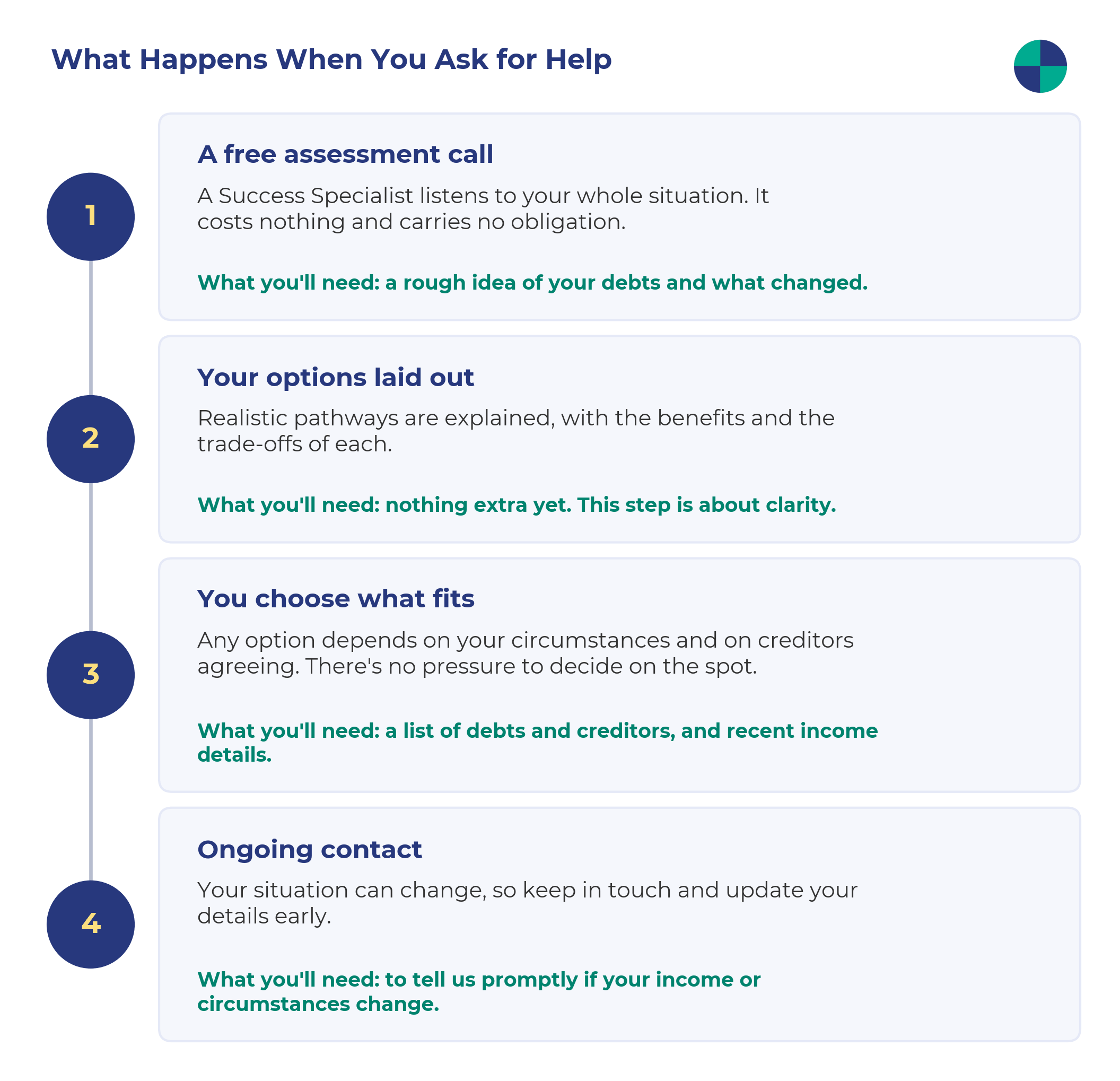
Figure 5. What happens, step by step, after first contact.
Possible options we can talk through include:
There’s no one-size-fits-all and each depends on your circumstances and on creditors agreeing. A Part 9 Debt Agreement is listed on the public National Personal Insolvency Index and on your credit report, may not release every debt, and can end if repayments aren’t met. Debt Agreements also carry fees, which our Success Specialists explain in writing before you decide.
What Should You Do in the First Few Weeks After Losing Your Job?
To minimise financial stress, do these things early on:
- Contact your lenders early: Moneysmart says your lender must consider you for financial hardship assistance when you ask. It’s easier before an account falls into arrears.
- Check what support is available: Services Australia explains the payments that may be available when your employment ends, and eligibility rules apply.
- Avoid new credit to fill the gap: Including buy now pay later. It can quietly build the same pressure Michelle faced.
- Write down every debt in one place: The balance, the rate and the due date. It’s hard to choose a path without the full picture.
- Call the National Debt Helpline on 1800 007 007: It’s a free financial counselling service, and it can talk through your options.
What Does Reduced Work Look Like in the Data?
Losing a job isn’t the only way income drops. Reduced overtime or hours was named in 16.8% of Revive records between 2019 and 2025. It fell to 12.9% in 2021, when many people were holding on to their hours, then climbed to 18.4% in 2022 as conditions changed. For casual workers it was named in a third of records.
A cut in hours often doesn’t feel like a crisis, which is part of the problem. There’s no redundancy letter and no obvious moment to ask for help, just a slower month and then another.
Should You Touch Your Super After a Job Loss?
It’s a common question, and the rules are tighter than many people expect. A financial hardship super withdrawal generally needs 26 continuous weeks on an eligible Centrelink payment, and it’s decided by your fund, so it won’t be available in the first few months for most people.
Taking super out also permanently reduces your retirement balance, so it’s worth thinking about carefully. Our guide to the severe financial hardship super release explains the rules in detail.
What Does a Seven-Day Plan After Redundancy Look Like?
If you’d rather have something concrete to follow, here’s a general plan. It isn’t advice tailored to you, but you may still find it useful.
1. Day 1: Write down every debt with its balance, interest rate and due date.
2. Day 2: Check with Services Australia which payments may be available to you.
3. Day 3: Call your lenders’ hardship teams, explain what’s happened and ask what they can offer. Keep paying what you can afford in the meantime.
4. Day 4: Build a bare-bones budget, using Moneysmart’s free budget planner if it helps.
5. Day 5: Pause new credit, including buy now pay later.
6. Day 6: Tell someone you trust, so you aren’t carrying it alone.
7. Day 7: Call the National Debt Helpline on 1800 007 007 to talk through what you’ve found.
What should you say when you call a lender?
Keep it simple and make sure you do these four things:
- Explain what changed
- Say what you can afford to pay now
- Ask what hardship options exist
- Ask for any arrangement to be confirmed in writing
Always note the date, the name of the person you spoke to, and what was agreed. Having your numbers from Day 1 in front of you makes the call easier.
How Long Should You Wait Before Asking for Help?
There’s no strict deadline. But there are recommended routes. Because debt after job loss tends to compound quietly, the best (least costly) time to ask for help is usually before a payment is missed, not after. Lenders can only help with what they know about, and an early call, even if it ends in “we’ll talk again next month”, puts you on record as someone who asked.
If you’re unsure whether you’re “in trouble” yet, remember that a free conversation costs nothing, and you can decide afterwards what, if anything, to do.
What Are the Early Warning Signs That Debt After Job Loss Is Building?
These aren’t diagnoses, just patterns worth noticing early:
- Only minimum payments are being made on one or more cards
- One card or loan is being used to pay another
- Buy now pay later is covering groceries, bills or fuel
- Letters or calls from lenders are going unopened or unanswered
- The savings or redundancy buffer has gone, but the job search hasn’t produced income yet
If two or more of these sound familiar, that’s a good moment to list your debts and contact your lenders’ hardship teams, or to call the National Debt Helpline for free.
Before You Wait Another Month
The twelve-month lag isn’t inevitable. You don’t have to sit through it, worrying the whole time. It’s simply what tends to happen if people wait. There’s always an alternative. Take Michelle, for instance; every month presented a possible earlier exit point. For you, that exit point could be today.
If you searched “lost my job in debt”, you’ve already asked the right question. If you’ve lost your job and aren’t sure it’s “bad enough” yet to ask for help, a free, no-obligation conversation with one of our Success Specialists takes about twenty minutes. What would change if you had it now rather than at month ten?
General information only. This article isn’t financial, legal or tax advice, and Revive Financial can’t advise on your superannuation or Centrelink entitlements. Rules, rates and figures are as at October 2026 and can change, so check the sources named and your own provider. Outcomes vary and depend on your circumstances and, for debt options, on creditor agreement. Revive Financial: RDAA 1337 (Debt Agreement content) and ACL 503321 (credit content). Last updated: 8 October 2026.