
 Brett Gavin
Many Australians are not at all clear on what the NPII actually is, or how it works. However, it’s worth learning more about it, especially if you’re considering measures to cope with financial strain. In this case, it could directly affect you, because it essentially makes bankruptcy and debt agreements public. Members of the public can search the government register known as the National Personal Insolvency Index, usually shortened to NPII, at any time for a small fee.
You don’t need to spend hours reading up on the NPII to find out more. This guide explains what the National Personal Insolvency Index is, who can see it, what it records, how long entries stay, and how it differs from your credit report. Note that this is general information only, not legal or financial advice.
What Is the National Personal Insolvency Index?
The National Personal Insolvency Index is the official electronic record of most personal insolvency proceedings in Australia. The Australian Financial Security Authority keeps it. It covers individuals, not companies, and it records:
- Bankruptcies
- Debt agreements
- Personal insolvency agreements
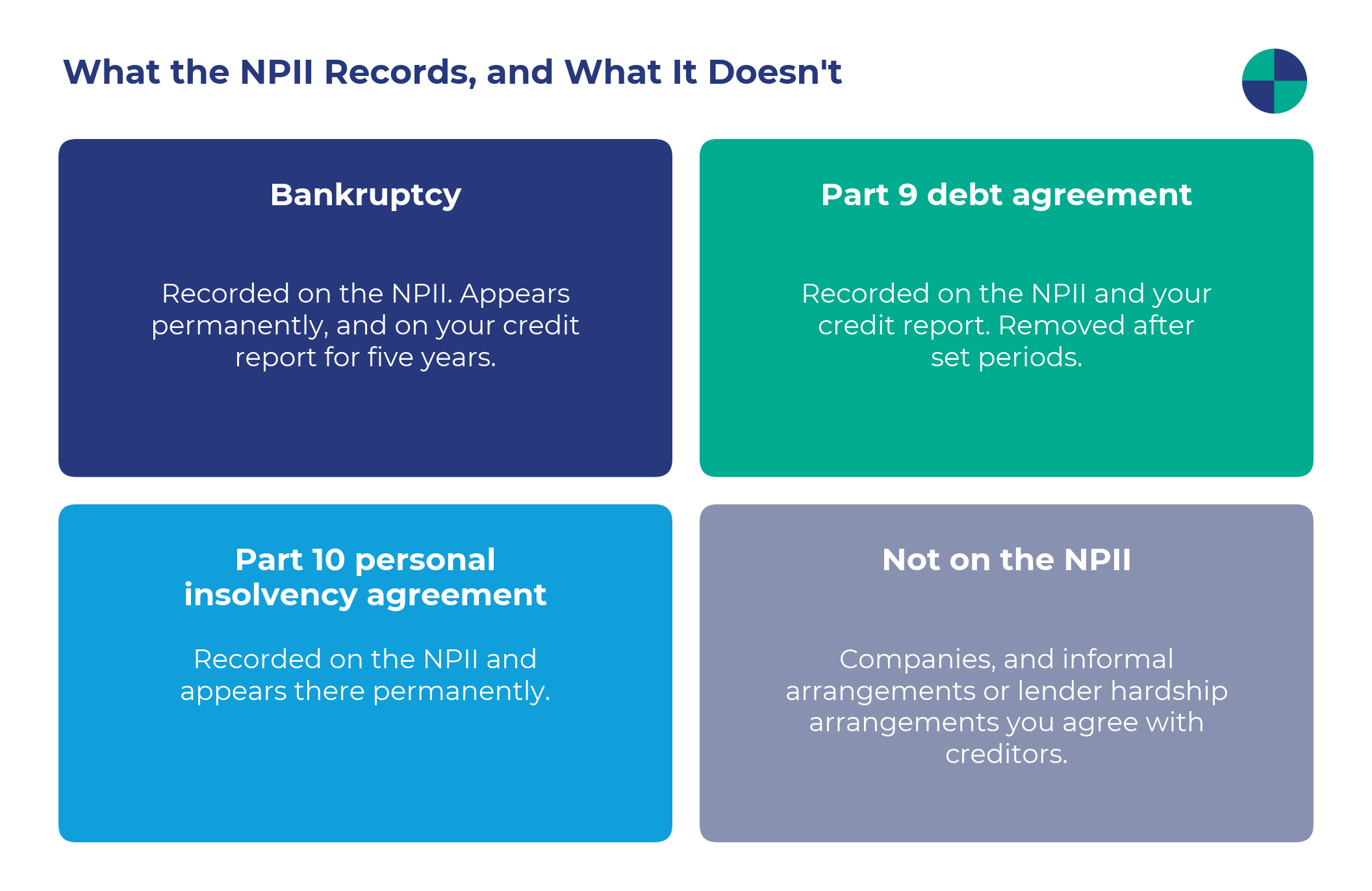
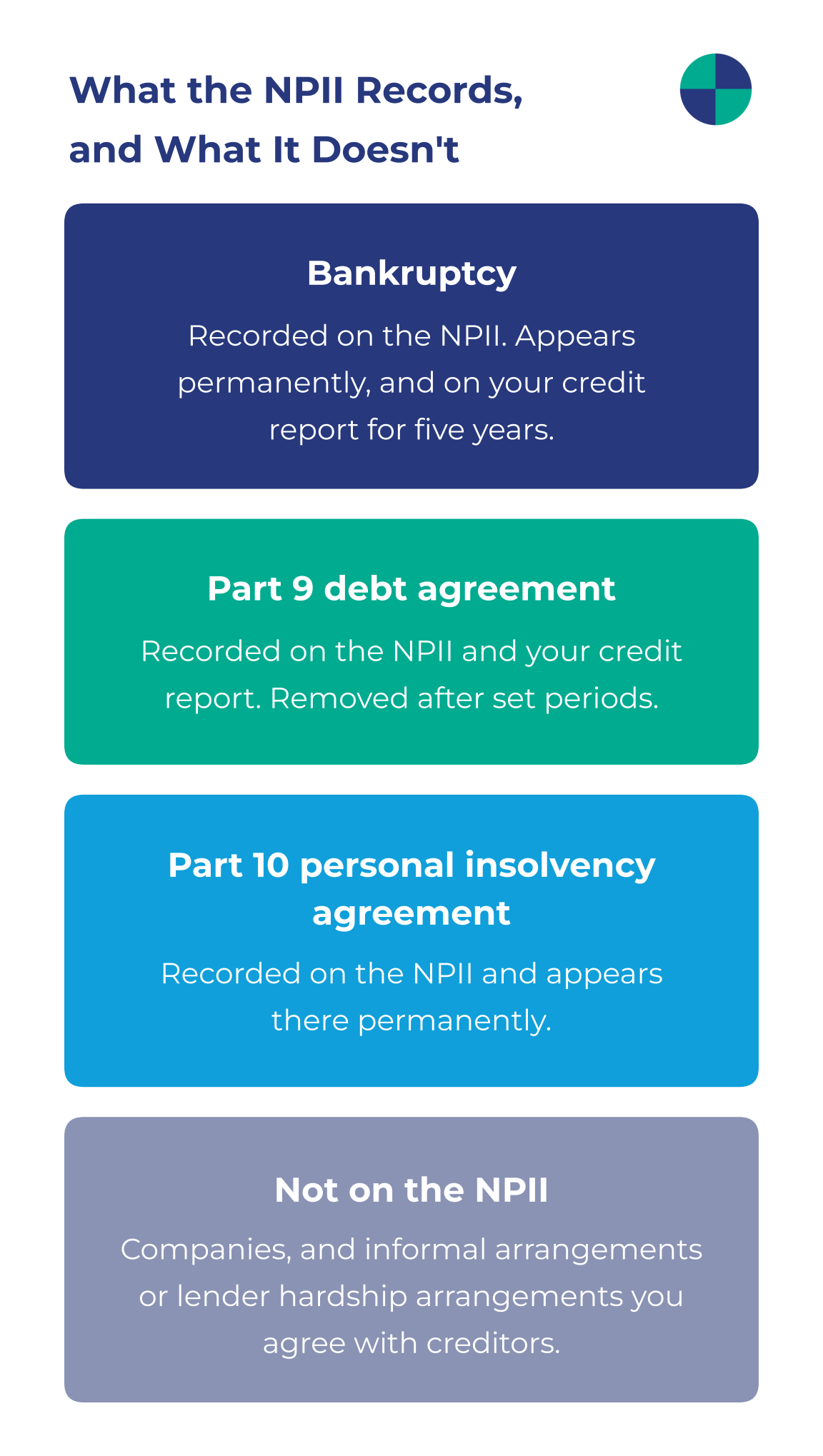
It’s important to realise that not everything ends up on the NPII. Informal arrangements you make directly with lenders, including hardship arrangements, for example, aren’t insolvency proceedings under the Bankruptcy Act, so they aren’t recorded on the NPII.
Who Can See the National Personal Insolvency Index?
It’s a public record, so anyone can run an NPII search through the Bankruptcy Register Search. There are several reasons someone might search the NPII, including:
- Employers checking a candidate
- Lenders checking an applicant
- Creditors checking whether a person who owes them money is already in an insolvency process
Here’s how it works:
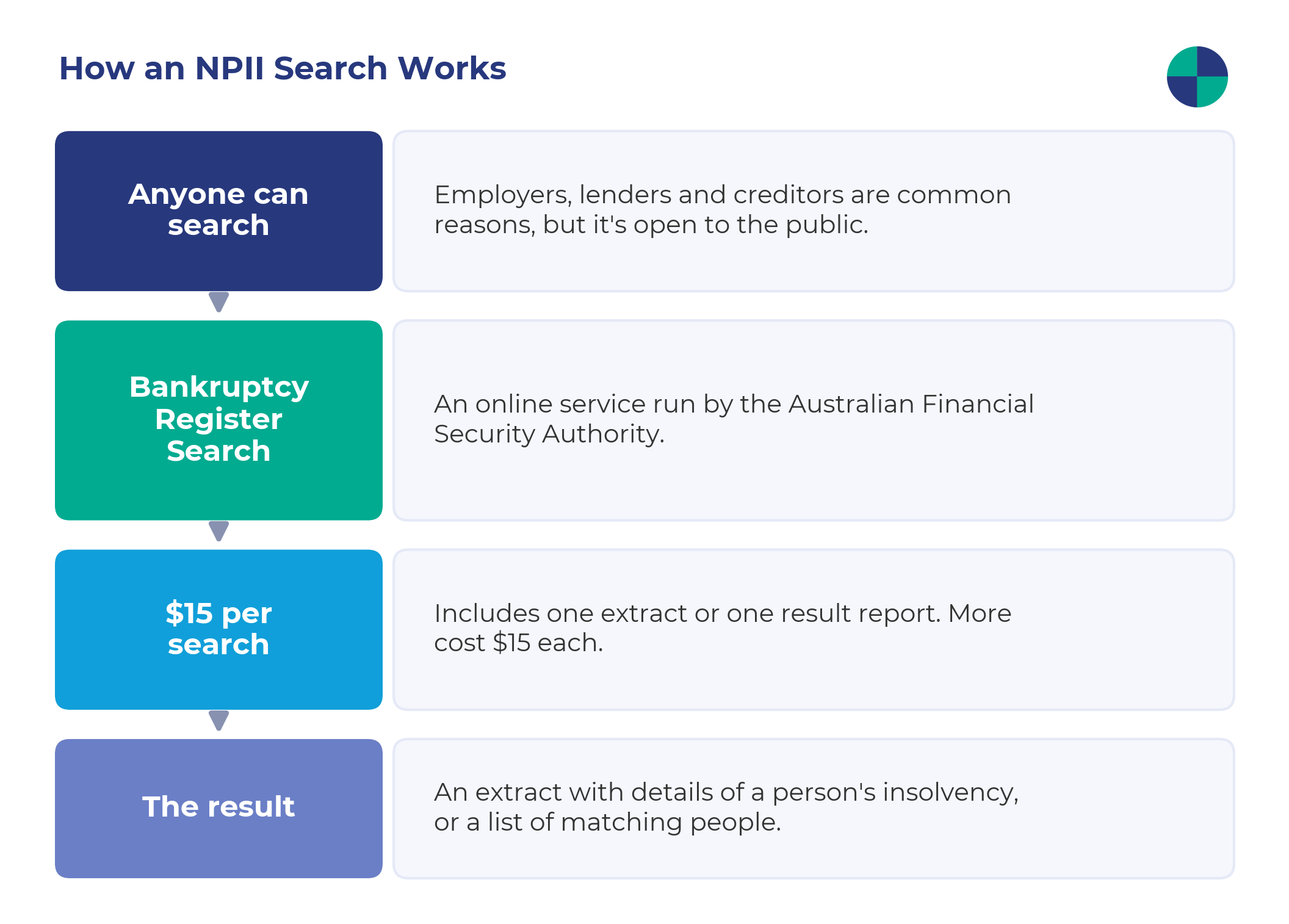
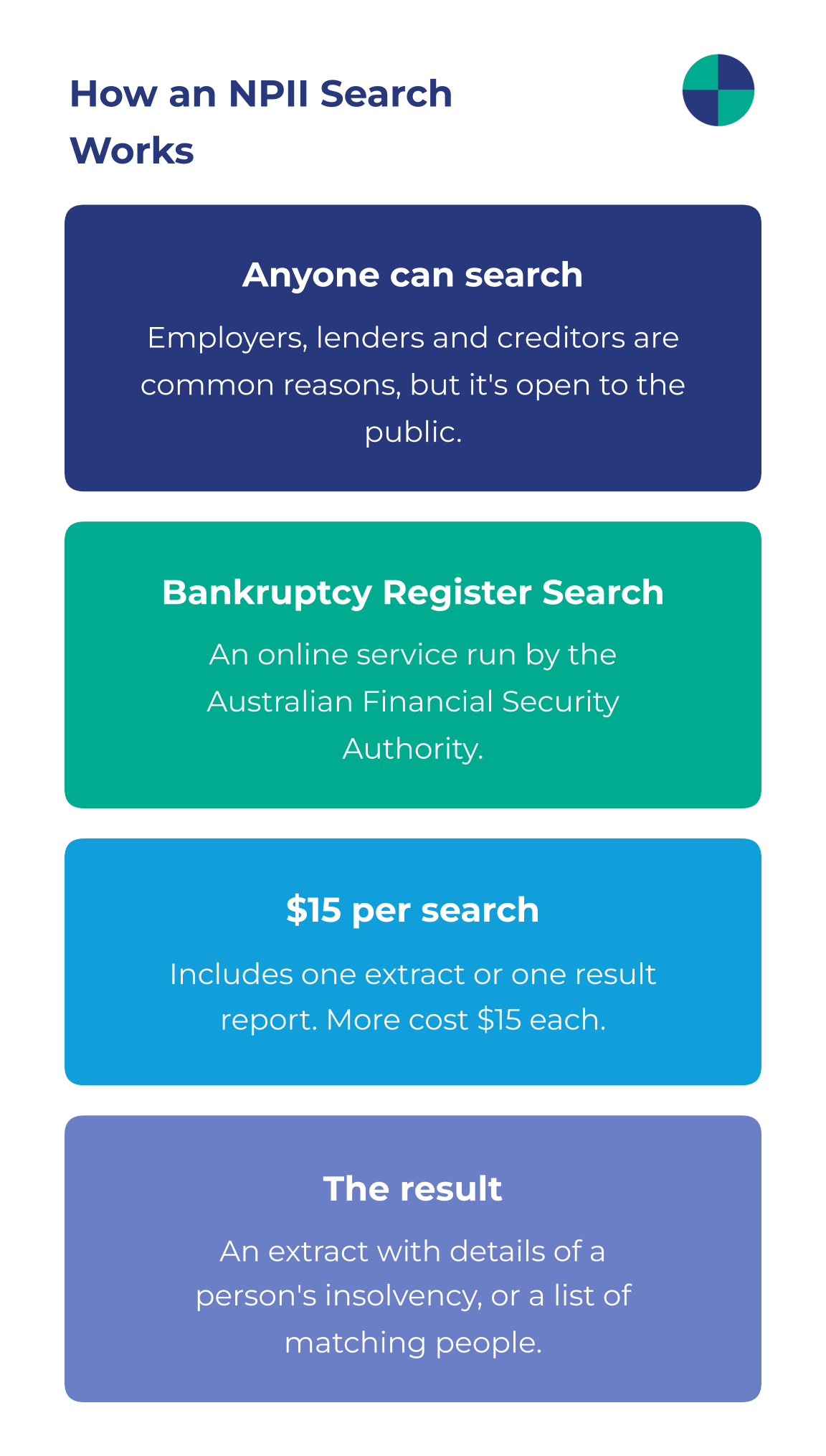
Each search costs $15 (paid by card). That includes one extract or one result report. An extract gives details of a person’s insolvency. A result report lists people who match the search.
If nothing matches, the search returns a ’no results’ extract. Extra extracts or reports cost $15 each.
Can personal details be hidden?
Those in the register can, in some cases, limit what personal details are shown. The Authority’s practice guidance does allow you to suppress some types of personal information, although this is on request only, not automatic. For example, someone might be able to remove their address if there’s a genuine safety concern. However, your name and date of birth generally remain. If you’re worried about this, contact the Authority directly on 1300 364 785.
How Long Do Entries Stay on the National Personal Insolvency Index?
It depends on the type of proceeding, and this is where people are most often surprised. Here’s a full breakdown of the current entry lengths:
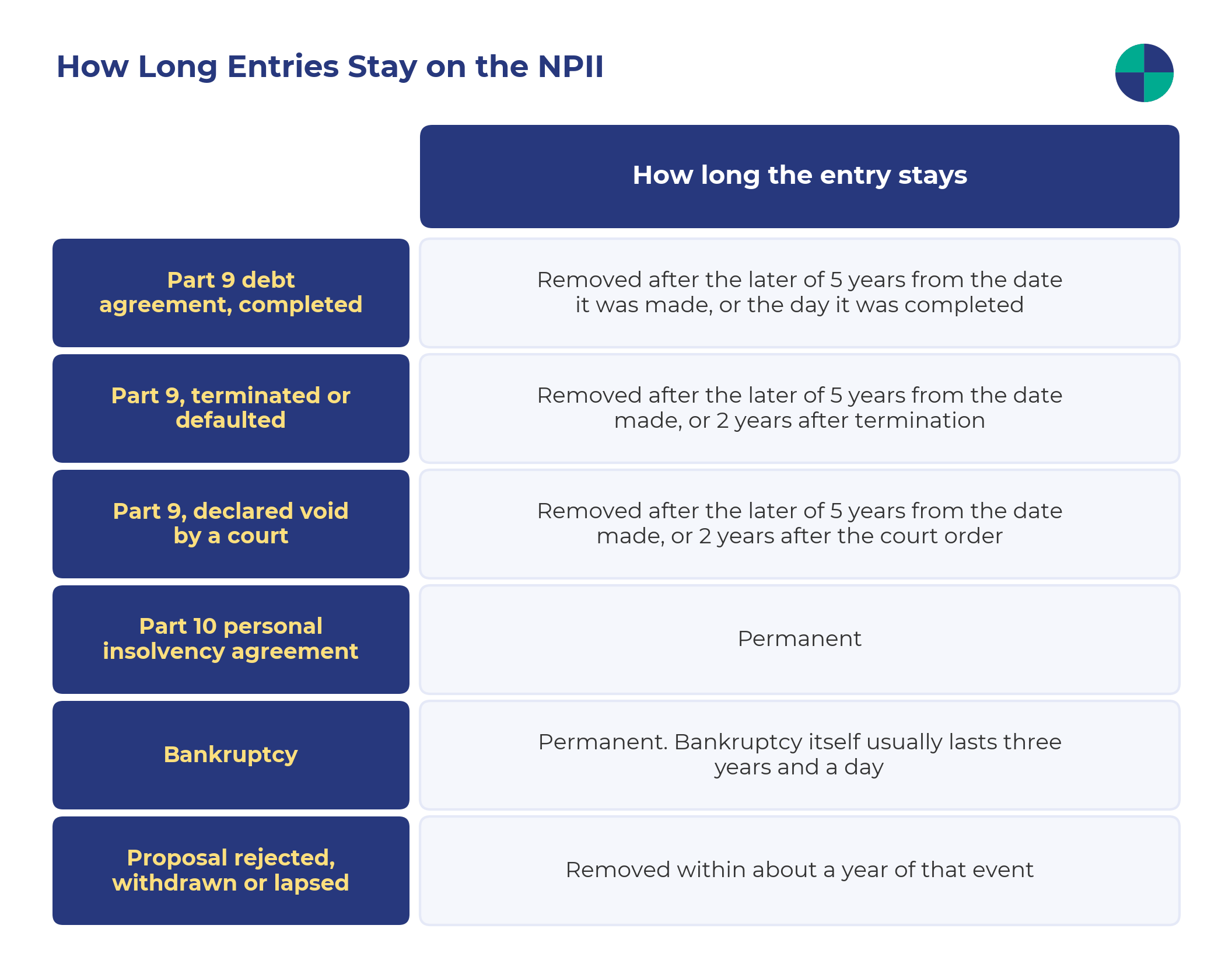
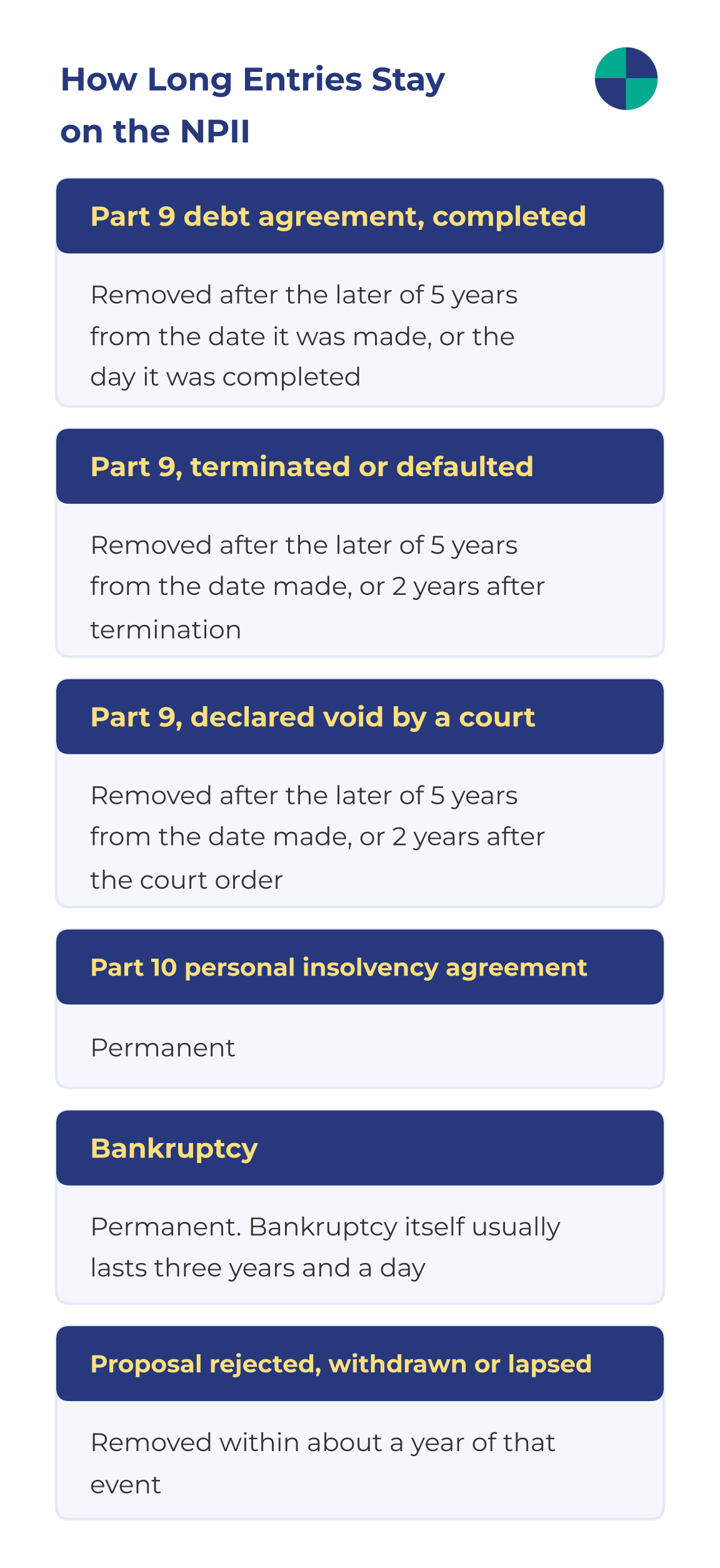
- Part 9 debt agreements: If the agreement is completed, the entry is removed after the later of 5 years from the date it was made or the day it was completed. If it’s terminated or ends through a six-month arrears default, removal is at the later of 5 years from the date made or 2 years after termination.
- Debt agreement proposals: If a proposal is rejected, withdrawn or lapses, the record is removed within a year of that event.
- Personal insolvency agreements and bankruptcy: Your name stays on the NPII permanently. Bankruptcy itself usually lasts three years and a day, and it appears on your credit report for five years.
How Is the NPII Different From Your Credit Report?
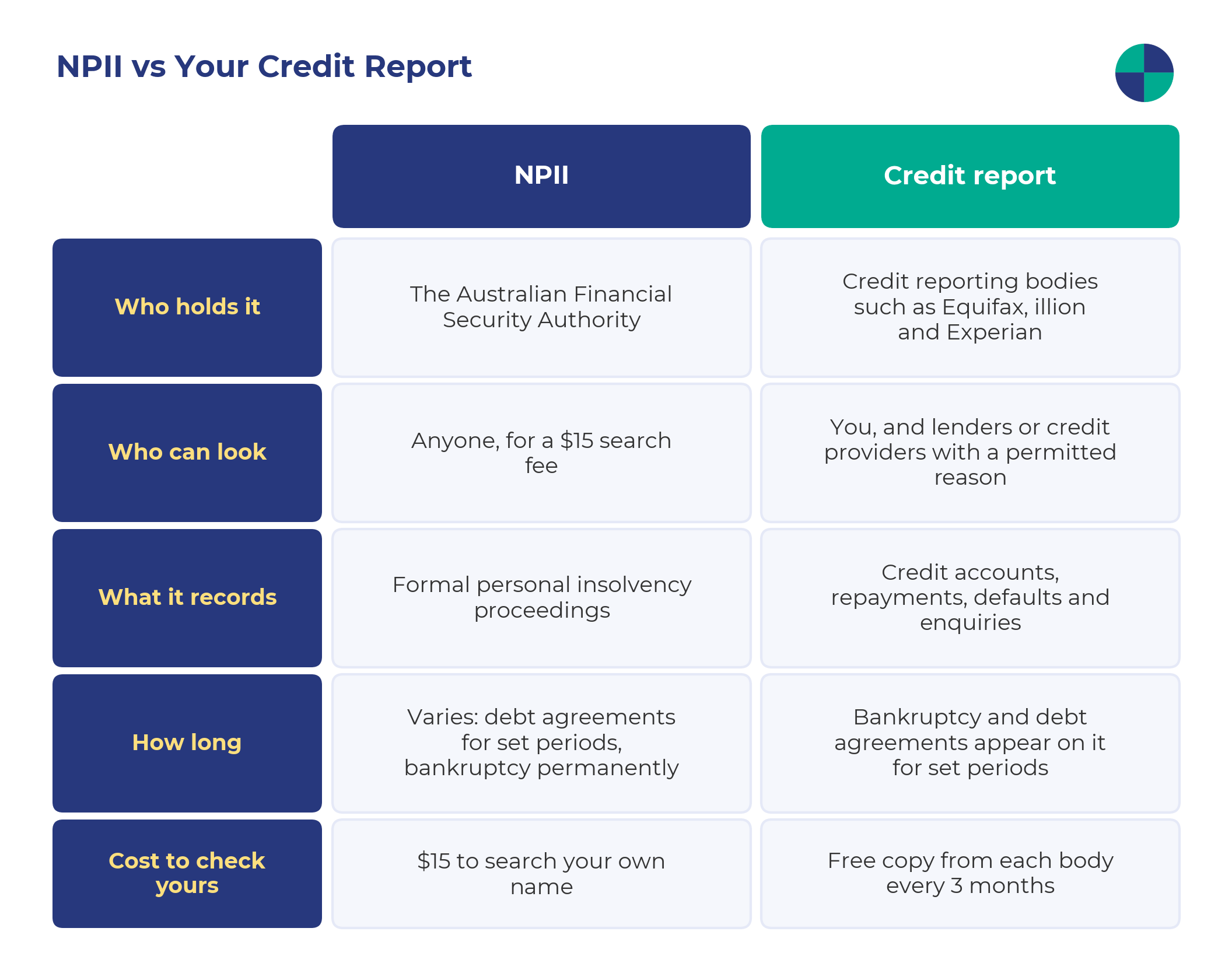
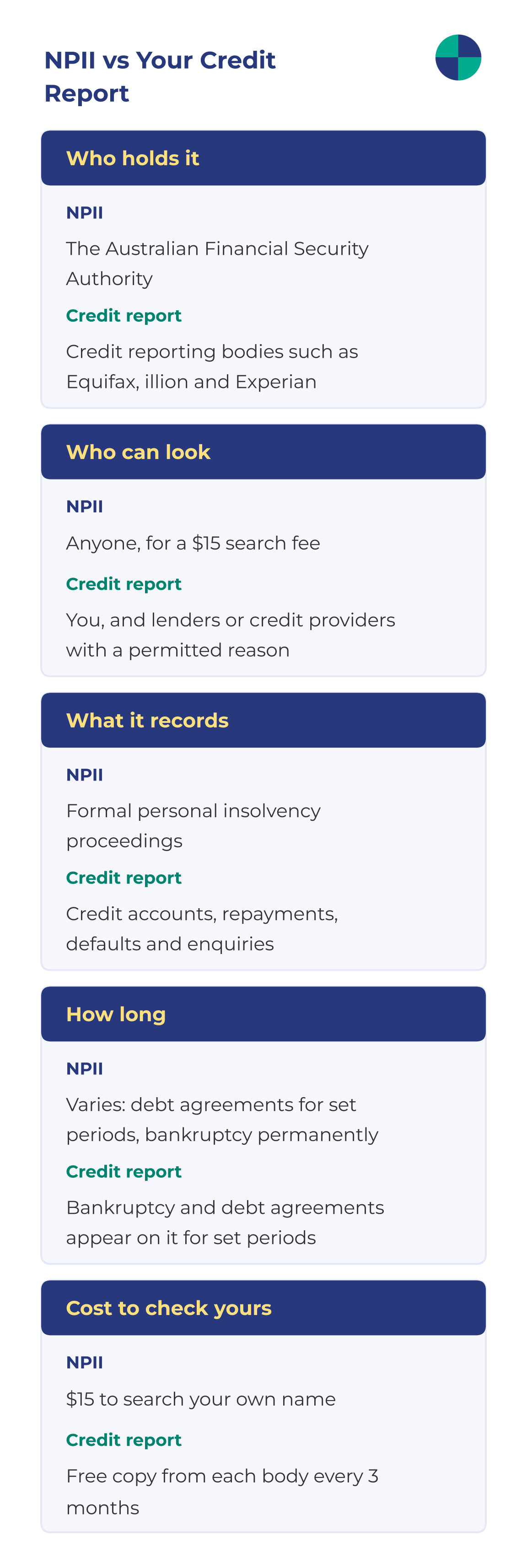
The NPII and your credit report are two separate records. A clean credit report doesn’t mean a clean NPII, or the reverse.
Here’s how the two differ:
Which Debt Options Appear on the NPII?
- Bankruptcy: On the NPII: yes, permanently. On your credit report: yes, for 5 years. Usually lasts three years and a day.
- Part 9 Debt Agreement: On the NPII: yes, for set periods. On your credit report: yes. Most included debts are released at the end, but some debts still have to be paid.
- Part 10 Personal Insolvency Agreement: On the NPII: yes, permanently. On your credit report: yes. No debt, income or property limits.
- Temporary debt protection: On the NPII: no. On your credit report: not applicable. Gives 21 days of relief from enforcement action.
- Informal arrangement or lender hardship plan: On the NPII: no. On your credit report: yes. Not legally binding, so creditors can change course.
A Part 9 Debt Agreement is listed on the National Personal Insolvency Index and on your credit report, may not release every debt, and can be terminated if repayments are missed. A six-month arrears default ends it automatically. These consequences matter as much as the benefits.
What Does an NPII Listing Mean for Work and Credit?
As always, it depends on the specifics. The most obvious affect the NPII can have is when seeking a loan. Lenders will see your listing, which may make borrowing harder while it lasts.
Similarly, an NPII listing won’t be relevant in every job, but certain licensed or regulated roles do have strict rules about insolvency. Some employers check. It’s a good idea to check the requirements of your profession or licence before choosing an option.
None of this is a guarantee or a reason to avoid getting help, but It’s important to know.
What Do Revive Client Records Show?
We have clear records on why clients come to us for help. These are Revive’s clients only, and people who contact us tend to have some capacity to repay, so they don’t necessarily represent all Australians. However, they can tell us a lot about the subject.
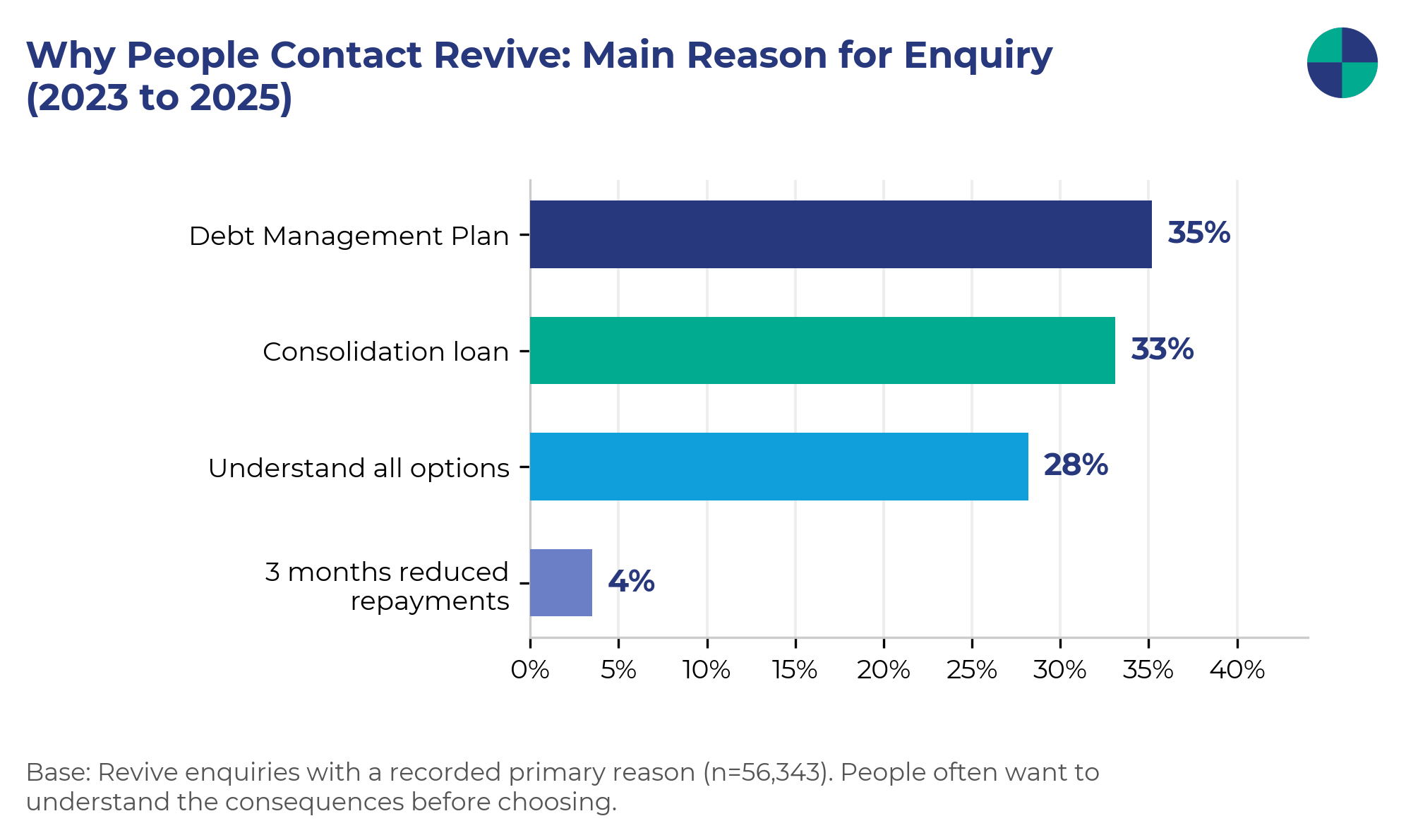
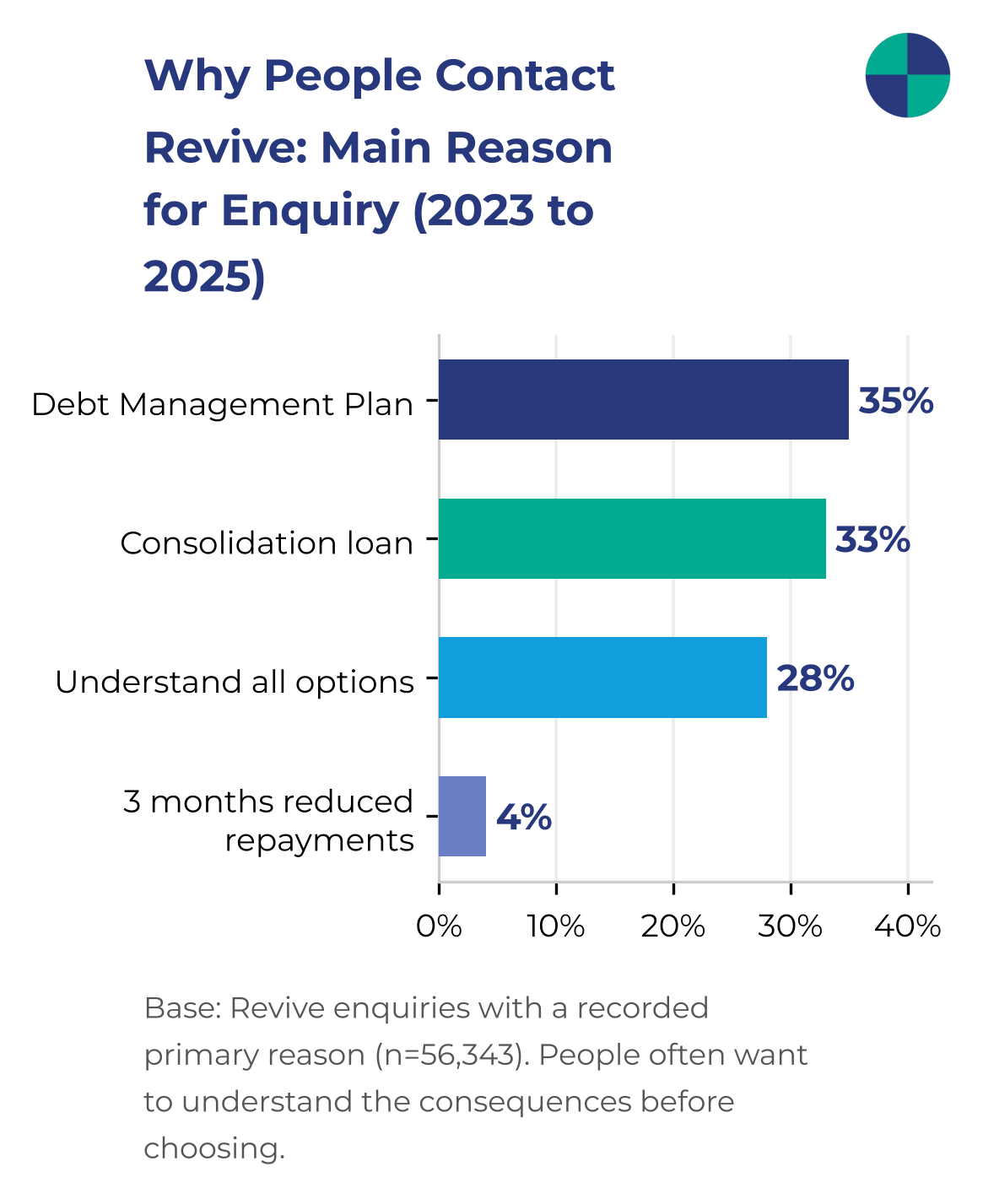
Between 2023 and 2025, 28.2% of enquiries said their main reason was to understand all their options. Many of those questions are about what gets recorded and for how long. About 3% of clients who answered our question about previous insolvency had been bankrupt or in an arrangement before. In 2025, 99.2% of clients with a recorded debt total were under the Part 9 debt limit, so for most people the real question isn’t whether the limit applies but what each option would mean.
What Does This Look Like in Practice?
Greg’s Story (Illustrative)
Greg, a hypothetical 44-year-old, was weighing a Part 9 Debt Agreement and asked who could see it. He learned it would be listed on the NPII and his credit report and that anyone could pay $15 to search.
He compared it with asking lenders for hardship arrangements, which aren’t listed on the NPII but aren’t legally binding either. After a call to the National Debt Helpline and a read of the fees and consequences in writing, he chose the path that suited his situation. There was no single right answer.
Aisha’s Story (Illustrative)
Aisha, a hypothetical 39-year-old, completed a debt agreement years ago and wanted to confirm her record had been removed. She paid for an NPII search of her own name and read the result.
Because removal follows set rules, she checked the dates against the Authority’s guidance. If something didn’t look right, she knew she could contact the Authority on 1300 364 785.
Both examples are illustrative and don’t describe specific individuals. Outcomes vary and depend on individual circumstances and creditor agreement.
Should the NPII Stop You From Asking for Help?
The NPII is there to help lenders and businesses. It’s not there to scare people in genuine financial hardship away from seeking help. It shouldn’t stop you.
However, it should play a role in your decision making, and shape the questions you ask going into any agreement. Start with the free options: your lender’s hardship team and the National Debt Helpline (1800 007 007), which offers free financial counselling. Moneysmart (moneysmart.gov.au) explains the steps, costs and long-term effects of bankruptcy and debt agreements.
Revive Financial offers a free, no-obligation assessment, and we can talk through a Temporary Hardship Plan, an Informal Agreement or a Part 9 Debt Agreement. Each depends on your circumstances and on creditors agreeing. Debt Agreements carry fees, which our Success Specialists explain in writing before you decide.
Before You Search or Decide
The National Personal Insolvency Index is public, it’s permanent for some proceedings and time-limited for others, and it’s separate from your credit report. Knowing that before you choose an option is very important. If you’d like to see what’s recorded about you, an NPII search costs $15 and only takes a few minutes.
General information only. This article isn’t financial, legal or tax advice, and Revive Financial can’t advise on your superannuation or Centrelink entitlements. Rules, rates and figures are as at October 2026 and can change, so check the sources named and your own provider. Outcomes vary and depend on your circumstances and, for debt options, on creditor agreement. Revive Financial: RDAA 1337 (Debt Agreement content) and ACL 503321 (credit content). Last updated: 8 October 2026.